
Cursive C
Practice uppercase cursive C and lowercase cursive c with free printable cursive C worksheets. Learn how each form is shaped, follow guided writing steps, and practice smooth curves to build more consistent cursive handwriting.
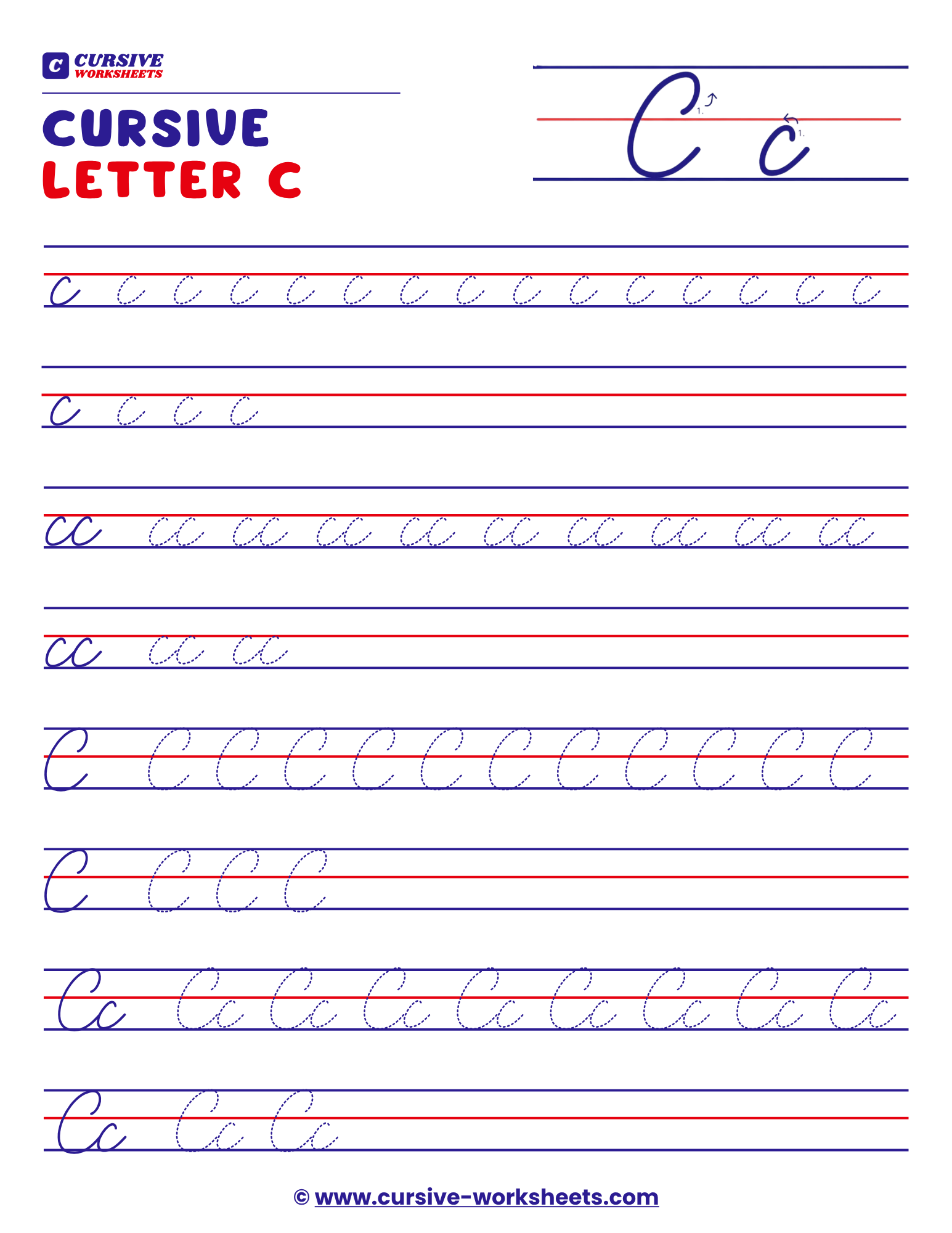
Download Cursive C Worksheet
Download a free printable cursive C worksheet (PDF) to practice uppercase and lowercase C. Trace each letter, follow the writing lines, then practice the forms on your own. Repeated tracing and independent writing can help improve control, spacing, and consistency.
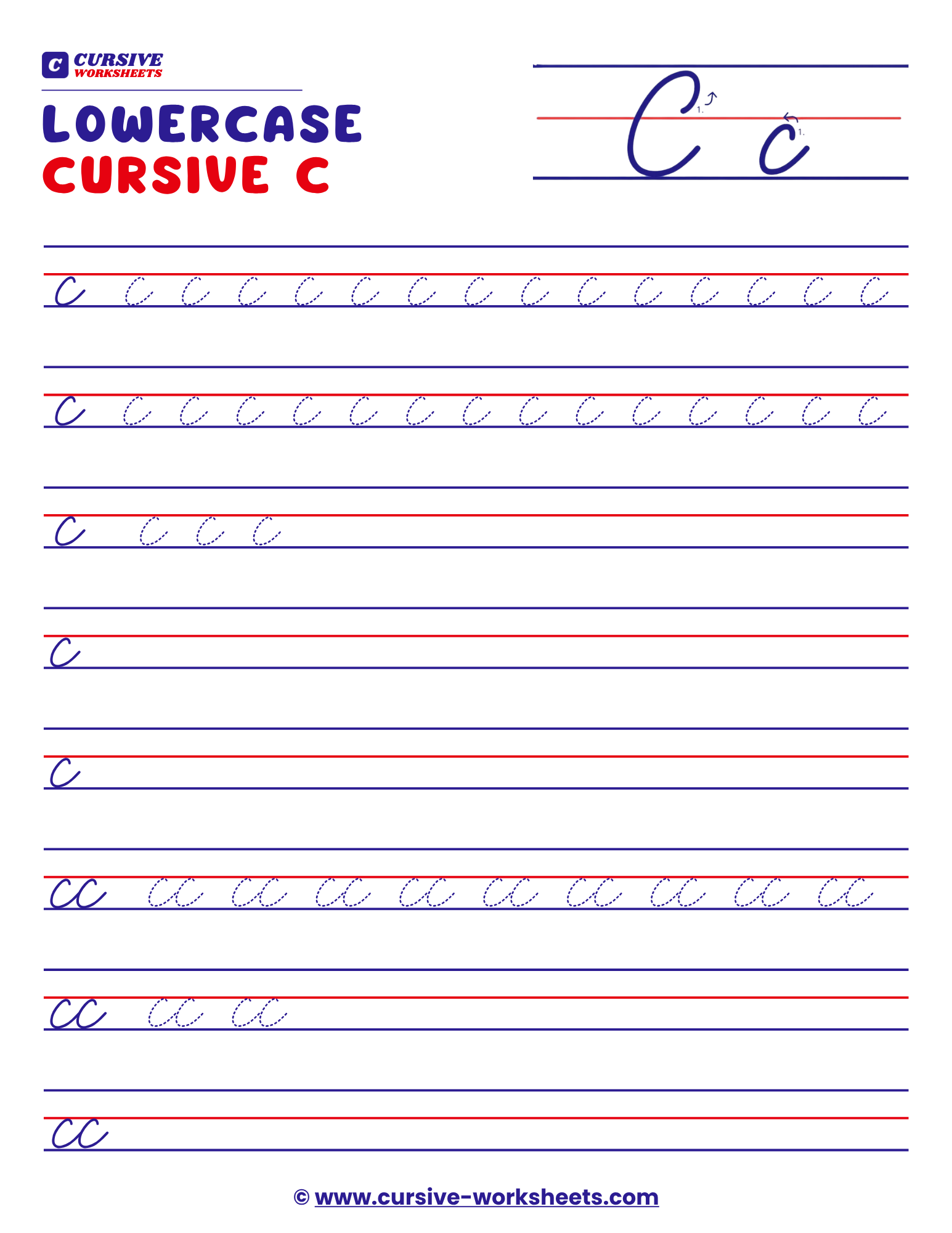
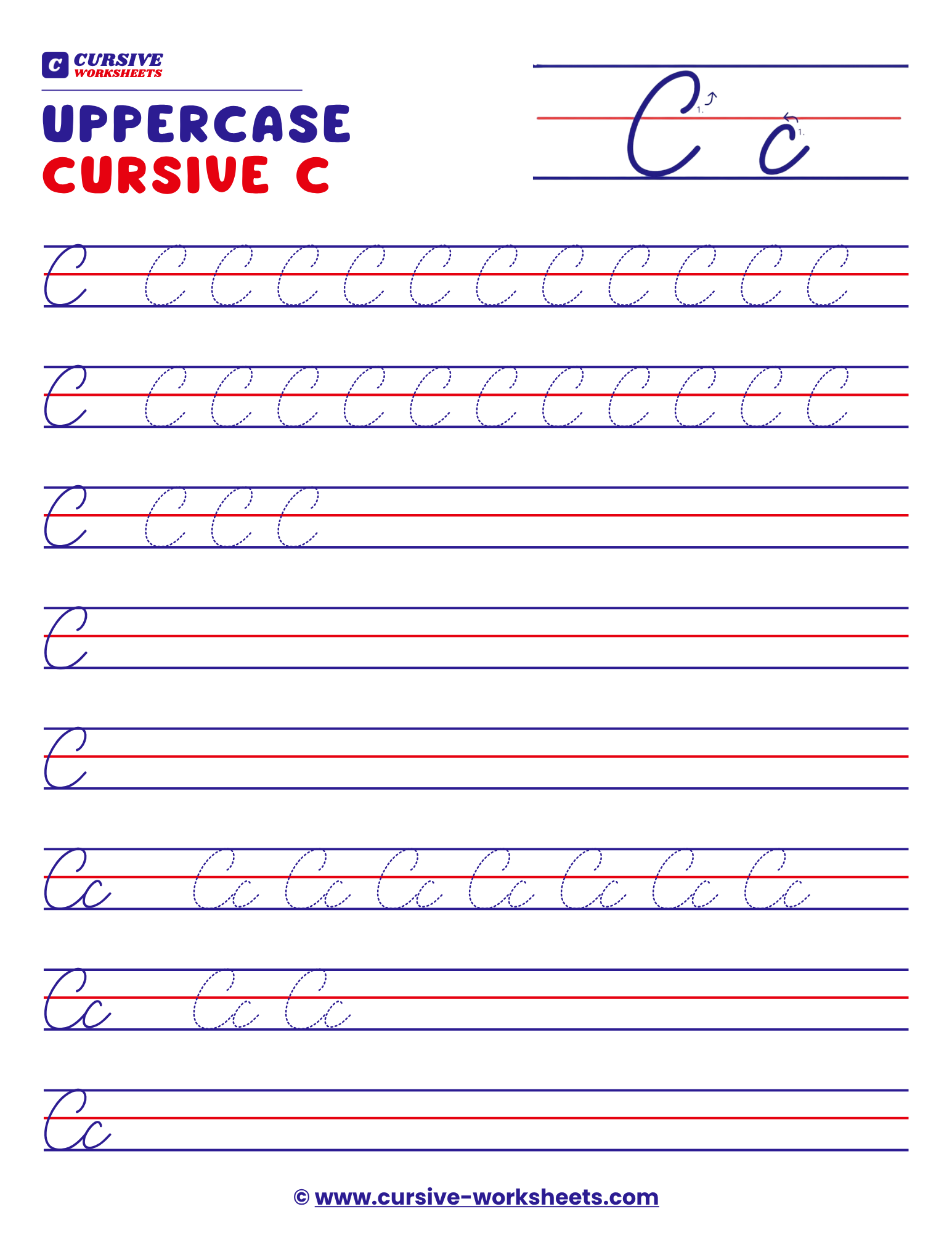
How to Write C in Cursive
Cursive C is mainly made with curved movements rather than the straight strokes used in some other letters. The uppercase C is large and open, while the lowercase c is smaller and usually formed with a simple curved stroke. Focus on the direction of the curve, the size of the letter, and the way the stroke leads into the next letter.
How to Write a Capital C in Cursive
To write a capital C in cursive, begin near the upper writing area and make a broad curved stroke that moves around the letter without completely closing it. Continue the curve downward and around, then finish with a stroke that can lead naturally toward the following letter.
Keep the capital C open and rounded rather than closing it like an O. Practice making several capital Cs on a ruled line, paying attention to the height, width, and smoothness of each curve.
How to Write a Lowercase C in Cursive
A lowercase cursive c is a small, open curve formed within the lowercase writing space. Begin around the midline and guide the pencil through a rounded curve toward the baseline before bringing the stroke back upward.
Unlike letters that require a closed loop, lowercase c remains open. The ending stroke should leave enough movement to connect with the next letter when c appears inside a word. Practice lowercase c slowly at first, then gradually increase your writing speed while keeping the curve clear.
How to Connect Cursive C to Other Letters
Cursive c is useful for practicing smooth connections because its open ending can flow directly into many following letters. Start with short two-letter combinations before moving to complete words.
Connecting Lowercase Cursive C
After forming the curved body of lowercase c, continue the ending stroke toward the next letter. The exact connection can vary with the cursive style, but the goal is to keep the pencil movement smooth and avoid an unnecessary lift between letters.
Practice combinations such as ca, ce, ch, ci, cl, co, cr, and ct. Then use familiar words such as cat, cell, city, clap, coat, and crab to practice the letter within real handwriting.
Pay attention to the space between c and the following letter. The connection should be clear without making the two letters run together.
Connecting Uppercase Cursive C
A capital cursive C can connect to a following lowercase letter through its finishing stroke. Because uppercase C is larger than lowercase c, practice the letter by itself first and then add simple combinations.
Try combinations such as Ca, Ce, Ch, Cl, Co, and Cr. These combinations help you practice moving from a large capital letter into the smaller forms that follow it.
When writing a word that begins with a capital C, keep the capital letter noticeably taller than the lowercase letters. The transition should feel smooth without making the first letter so large that it disrupts the spacing of the word.
Common Mistakes to Avoid When Writing Cursive C
Cursive C is mostly made from curves, so beginners often have difficulty controlling the size, openness, and direction of the letter. Watch for these common problems during practice.
- Closing the lowercase c: A cursive c should remain open. Closing the shape can make it look more like another rounded letter.
- Making lowercase c too narrow: A very tight curve may be difficult to recognize and connect to the next letter. Keep the curve open enough to remain clear.
- Making the capital C look like a printed C: Cursive capital C can have a more flowing shape than a standard block letter. Follow the cursive model used on your worksheet rather than copying a printed C.
- Making capital C too small: The uppercase C should be taller than lowercase c. If both letters are nearly the same height, the difference between uppercase and lowercase forms becomes less clear.
- Making the curve too wide: A capital C needs enough width to show its rounded shape, but an overly wide letter can create uneven spacing between words and letters.
- Stopping before the exit stroke: The ending movement of c helps it connect with the next letter. Stopping too early can make connected words look broken.
- Changing the slant: Keep the curve at a similar slant to the rest of your cursive writing. A sudden change in angle can make the letter look out of place.
- Rushing the curved stroke: Moving too quickly can make the C uneven or angular. Slow practice helps you develop better control before increasing your writing speed.
Practicing with the Printable Cursive C Worksheet
Use the printable cursive C worksheets to work on uppercase C and lowercase c separately before combining them with other letters. Start by tracing the models and following the writing lines. Once the movement feels familiar, write the letters without tracing.
Next, practice common lowercase connections such as ca, ce, ch, ci, cl, co, and cr. Move from two-letter combinations to short words such as cat, clap, clean, coat, and crab. This gives you practice with both the shape of c and its movement into the following letter.
For uppercase C, practice combinations such as Ca, Ch, Cl, Co, and Cr before writing names or sentences that begin with C. Regular practice can help improve the consistency of your curves, spacing, and connections.
Frequently Asked Questions
To write C in cursive, use a smooth curved movement rather than forming the letter with straight lines. Capital C is larger and more prominent, while lowercase c is a smaller open curve. Follow your worksheet model and practice each form repeatedly.
A lowercase cursive c is usually a small, open curve that fits within the lowercase writing space. It does not have a closed loop like letters such as o. The ending stroke can continue toward the next letter in a connected word.
Start near the upper part of the writing line and make a broad, rounded curve that moves downward and around without closing the letter. Finish with a smooth stroke that can lead into the following lowercase letter. The exact shape may differ between cursive handwriting styles.
Lowercase c can connect to the following letter through its ending stroke. Practice combinations such as ca, ce, ch, cl, co, and cr. For uppercase C, try combinations such as Ca, Ch, Cl, Co, and Cr.
Uppercase C is taller and uses a larger curved form, while lowercase c is smaller and stays within the lowercase writing area. Lowercase c is also commonly used as an open curve that connects to the next letter.
Good practice words include cat, car, cake, cell, city, clap, clean, coat, crab, and cloud. These words let you practice c with different following letters and improve your ability to connect letters in complete words.
Begin with large traced uppercase and lowercase C forms, then move to independent writing on ruled lines. Once the child is comfortable with the individual letters, introduce simple connections and C words. Short, regular practice sessions can help build better stroke control and letter consistency.
Cursive C can be relatively straightforward because both uppercase and lowercase forms rely heavily on curved movements. The main challenge is controlling the curve and keeping the letter open and consistent. Practice with tracing, independent writing, and letter connections can make the movement more familiar.