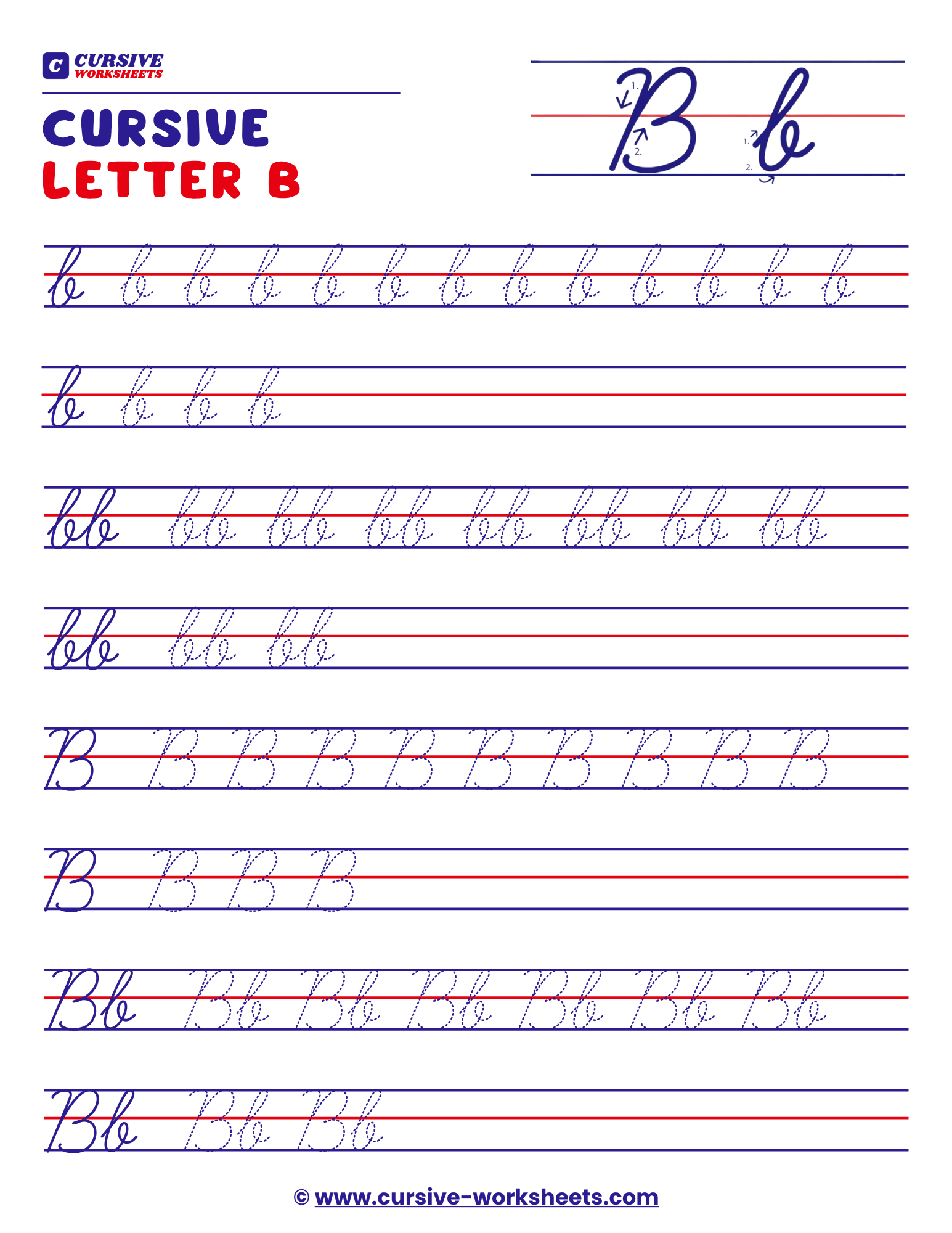
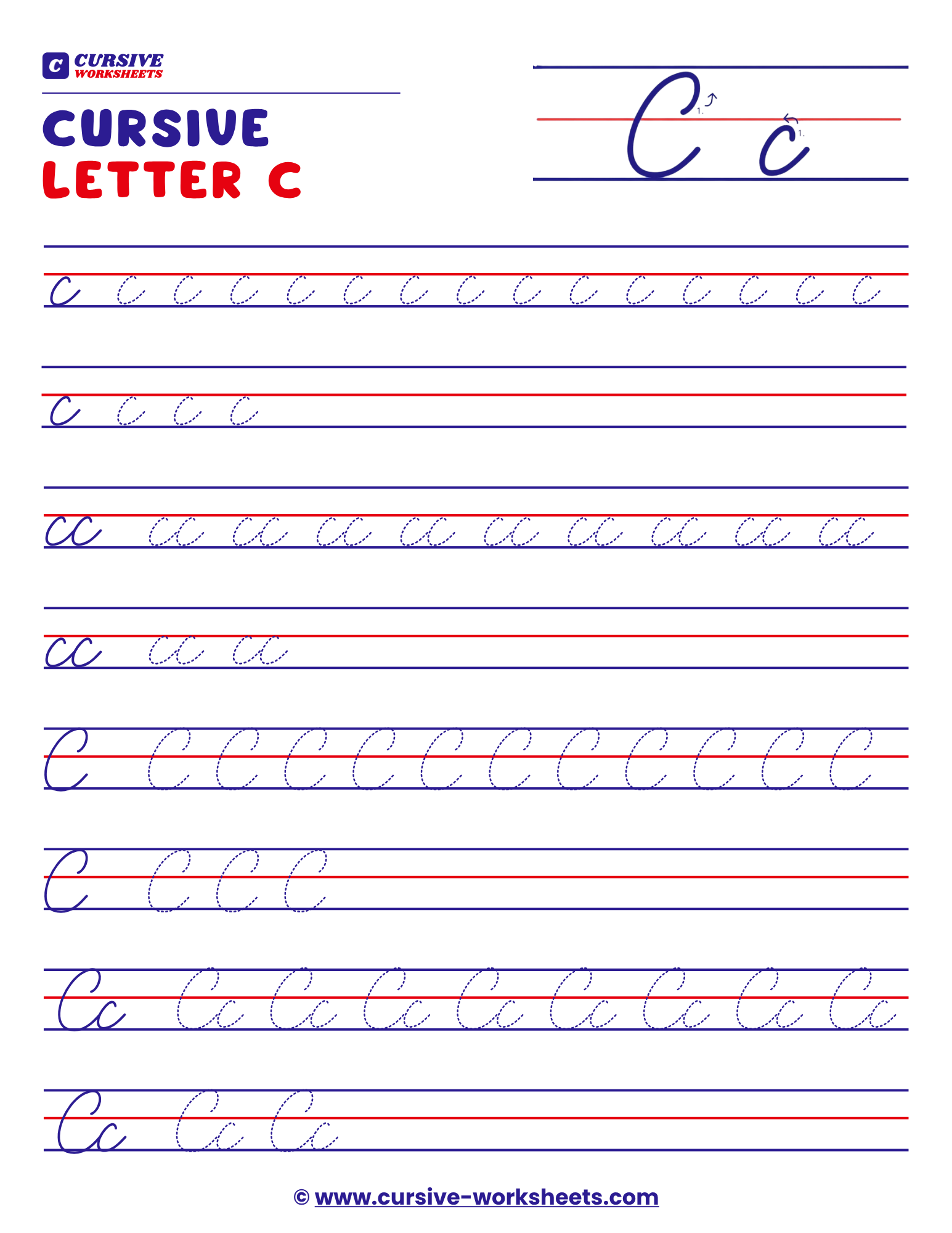
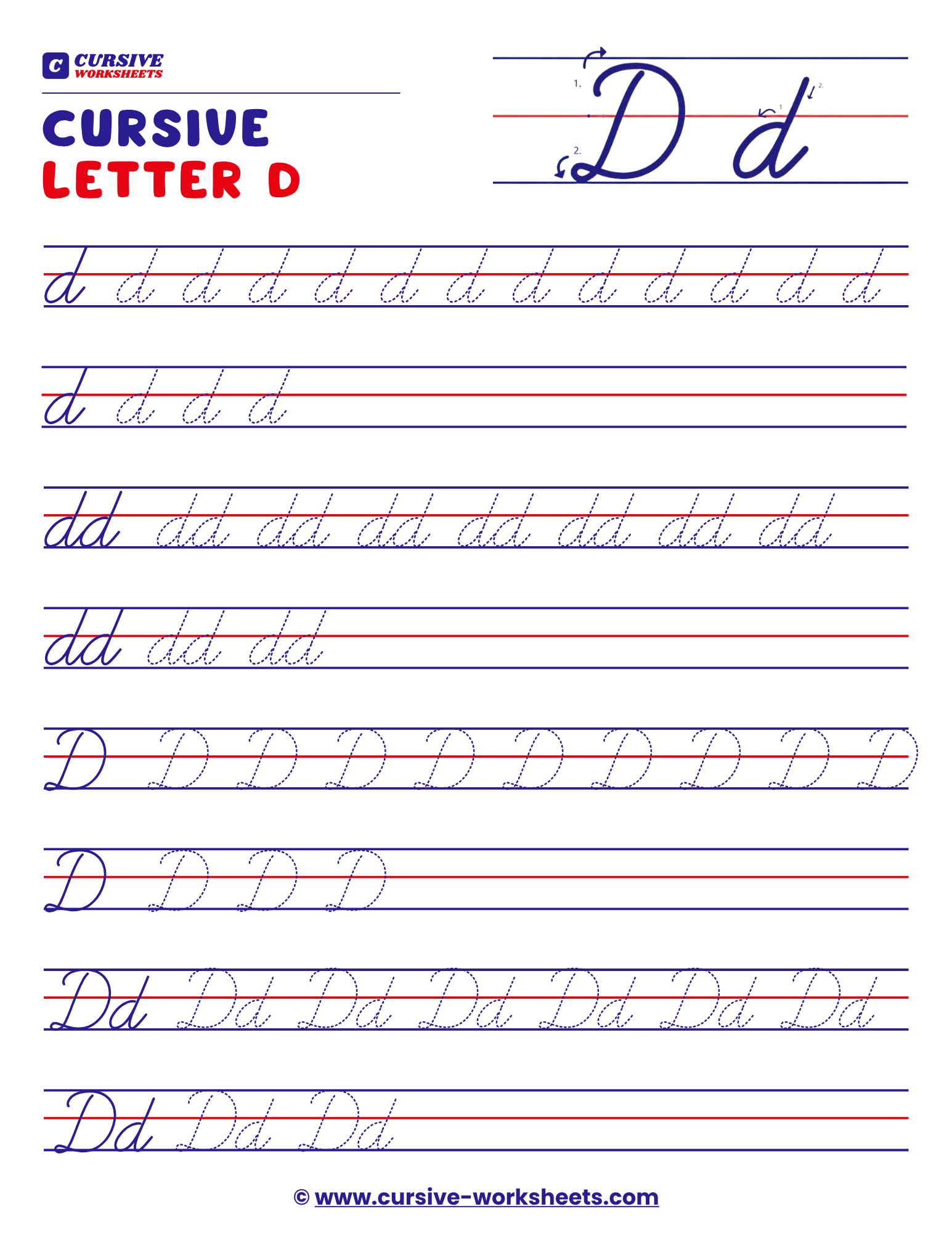
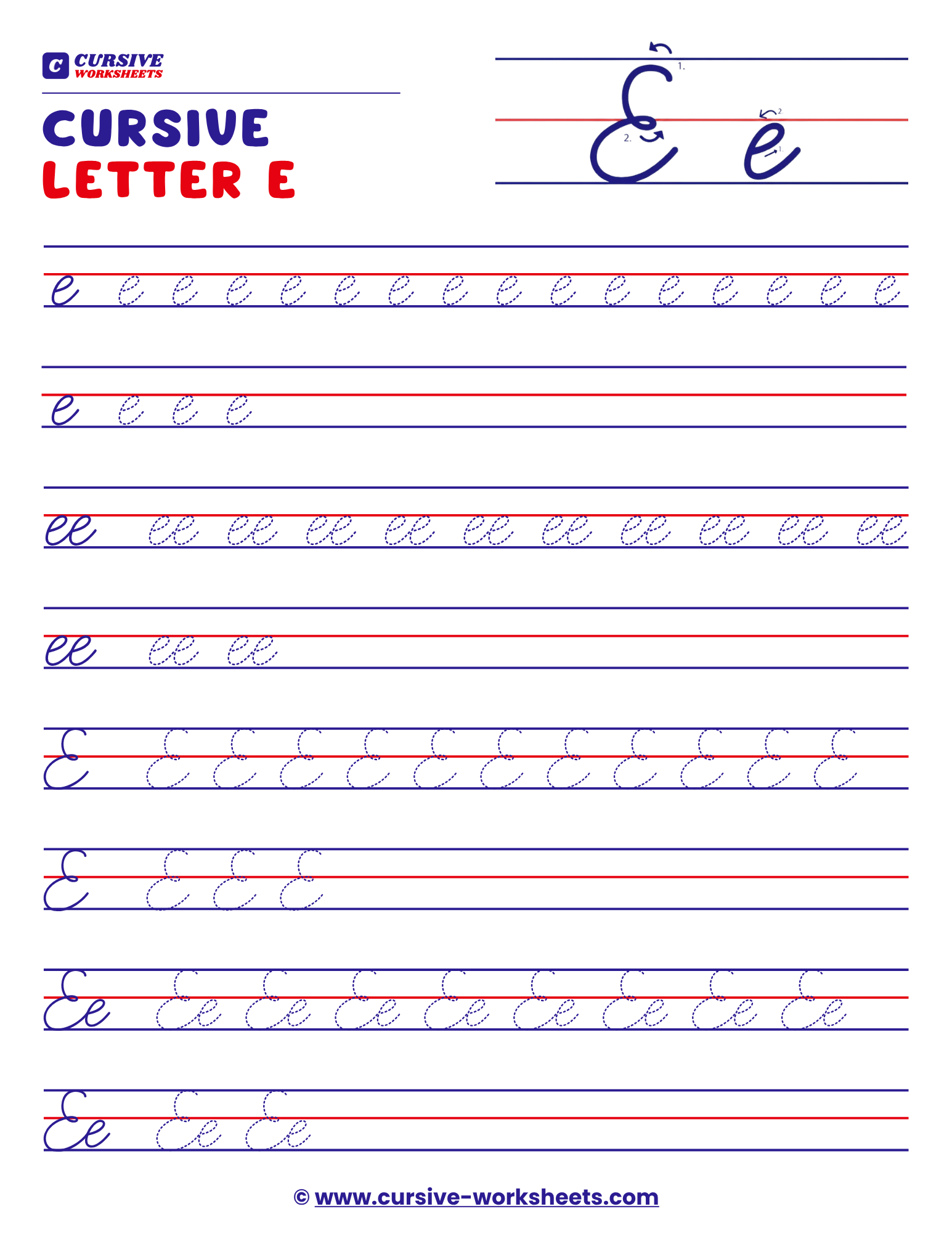
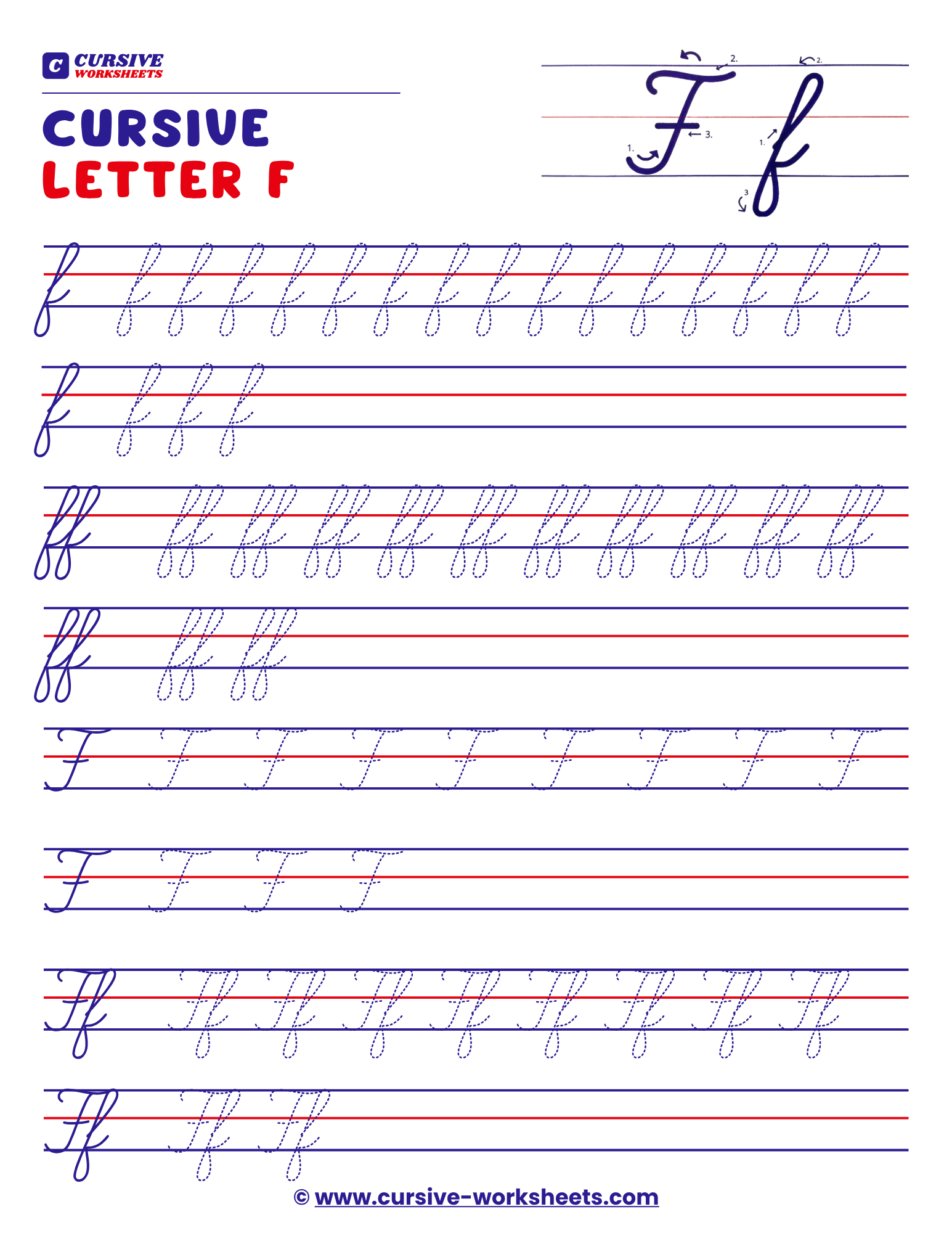
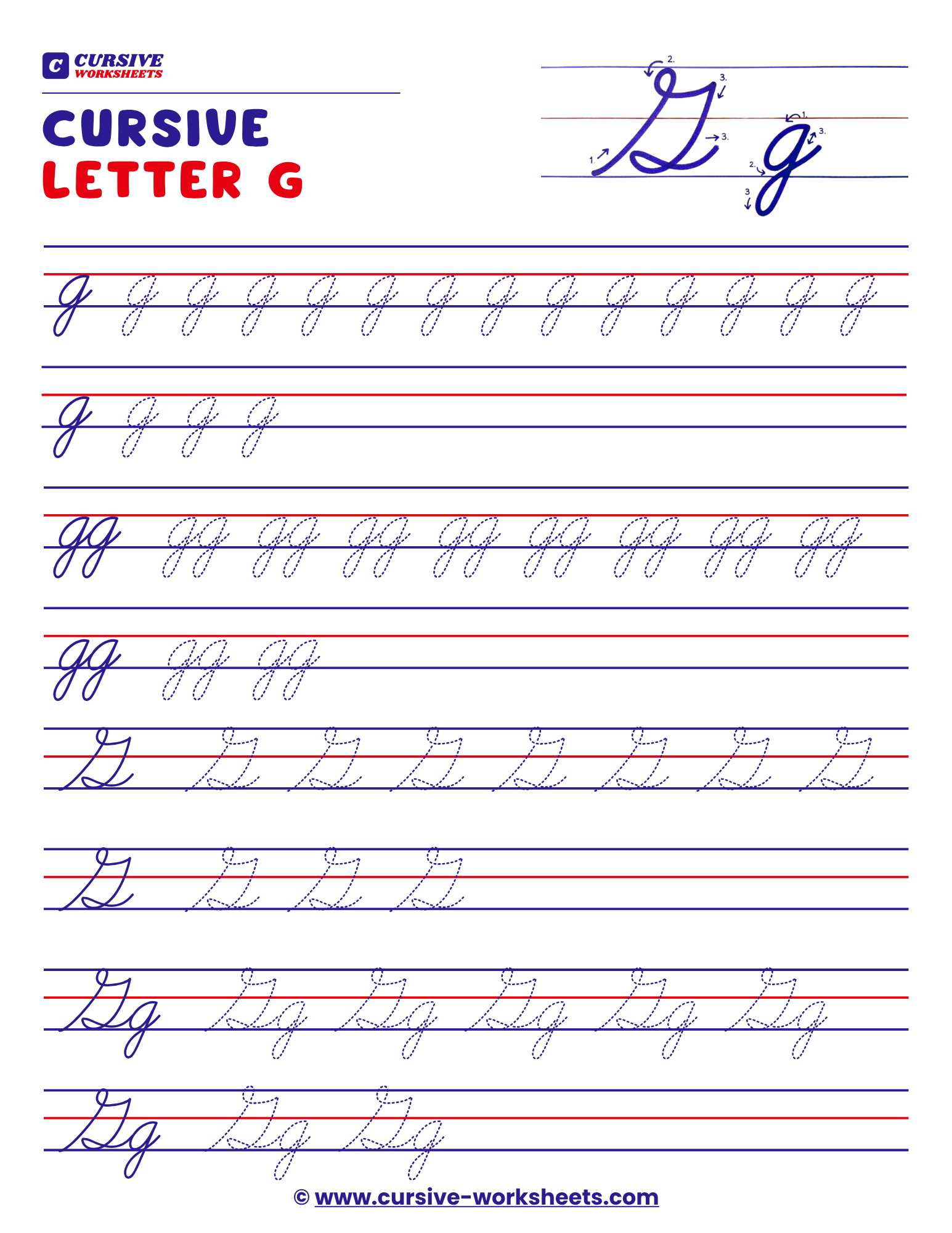
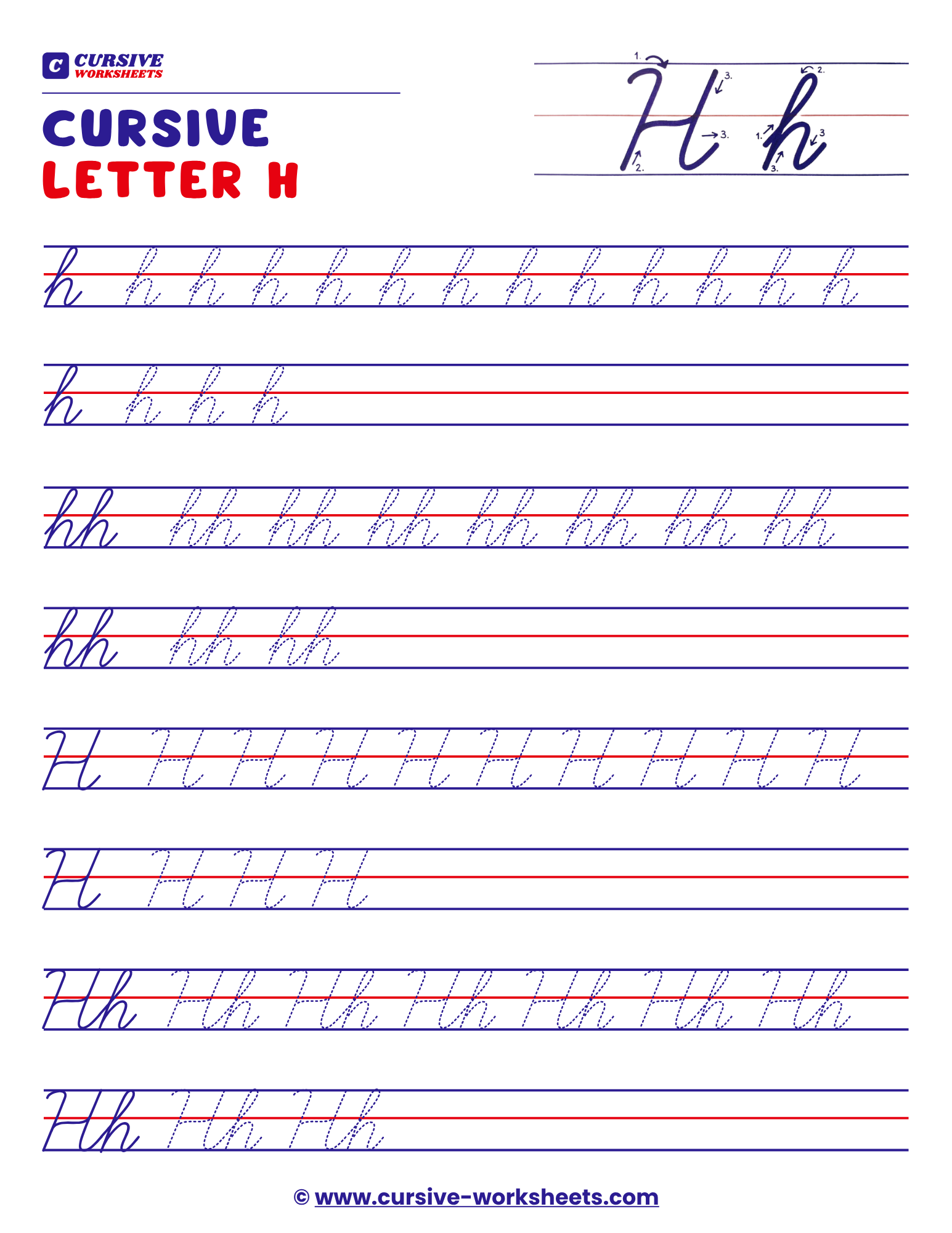
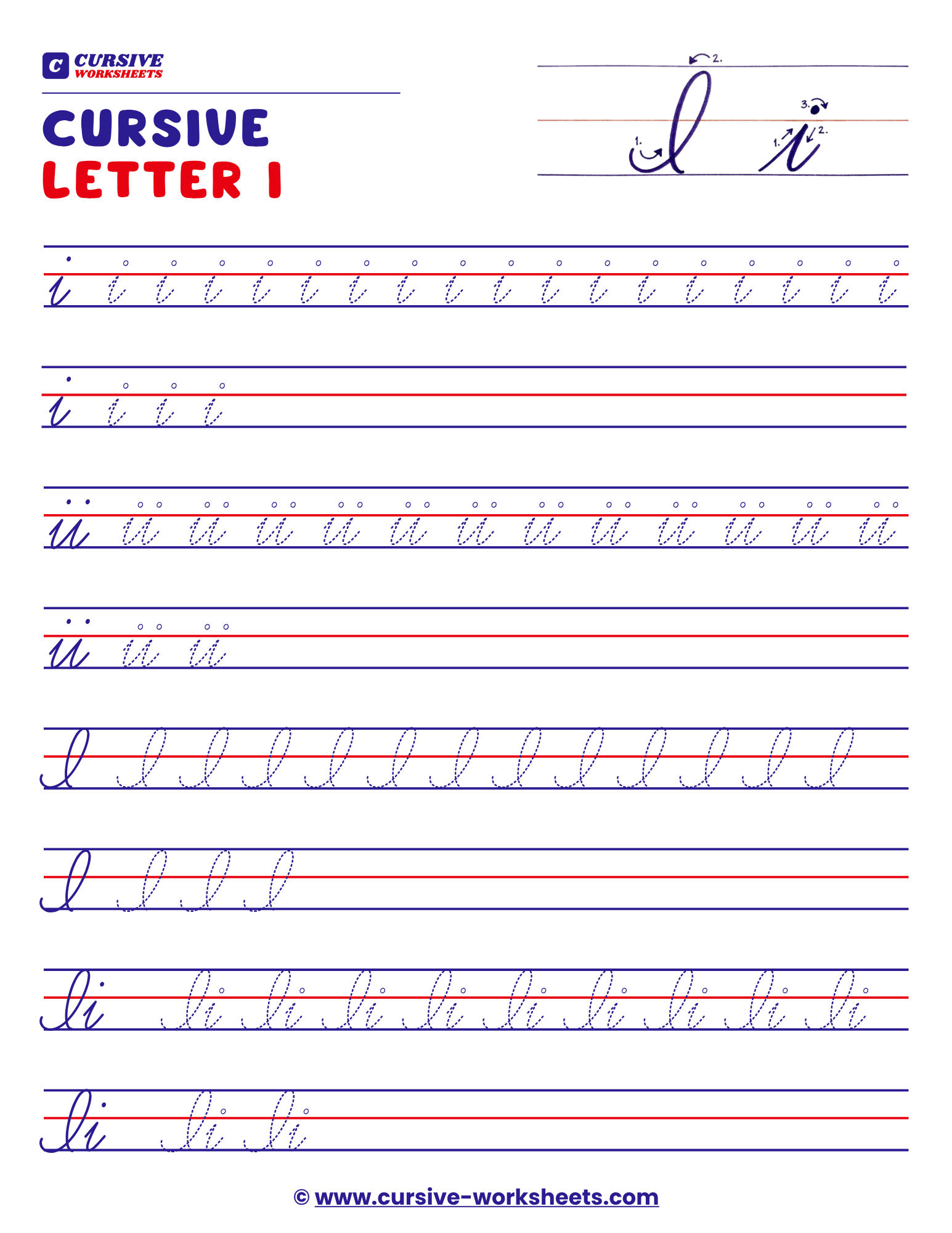
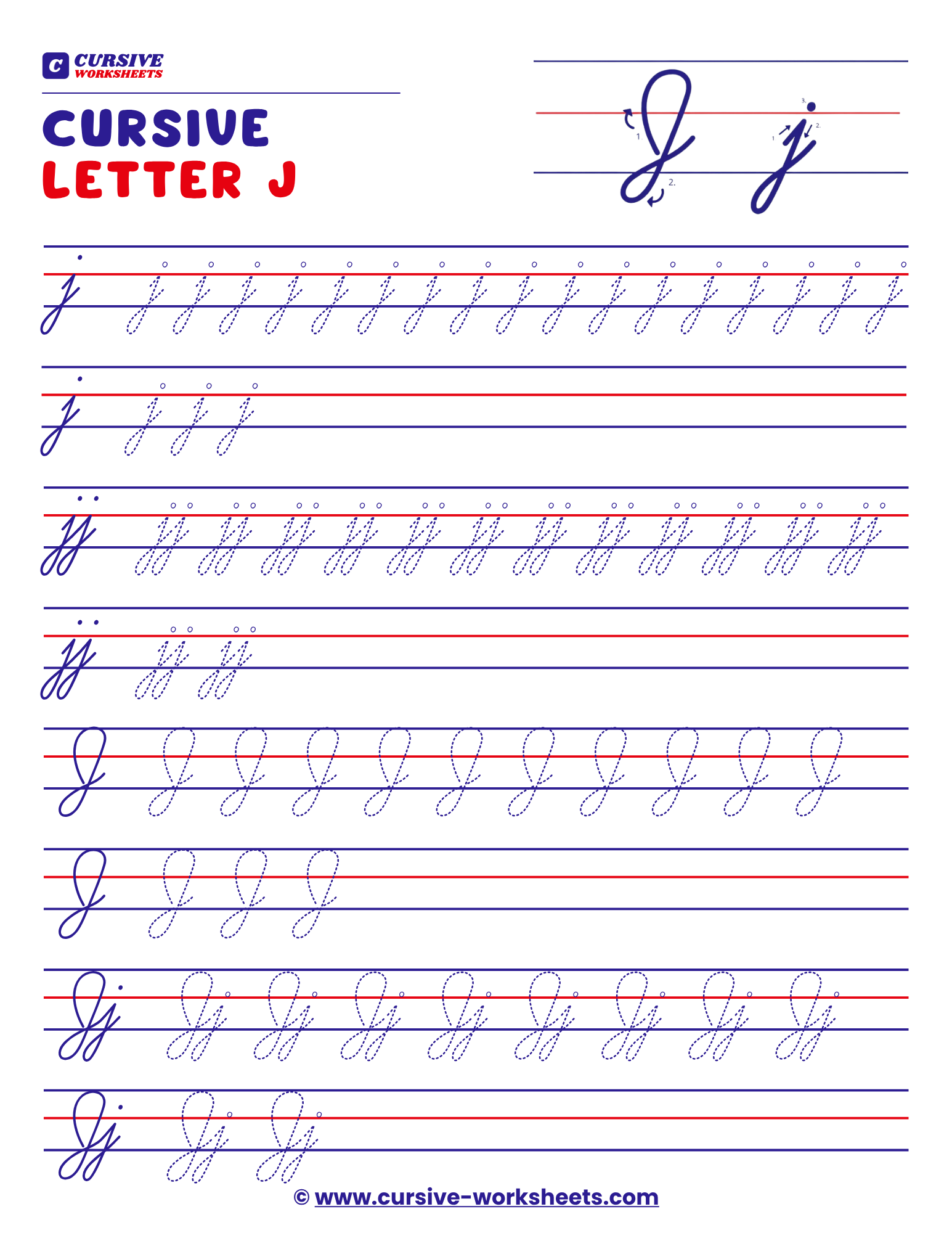
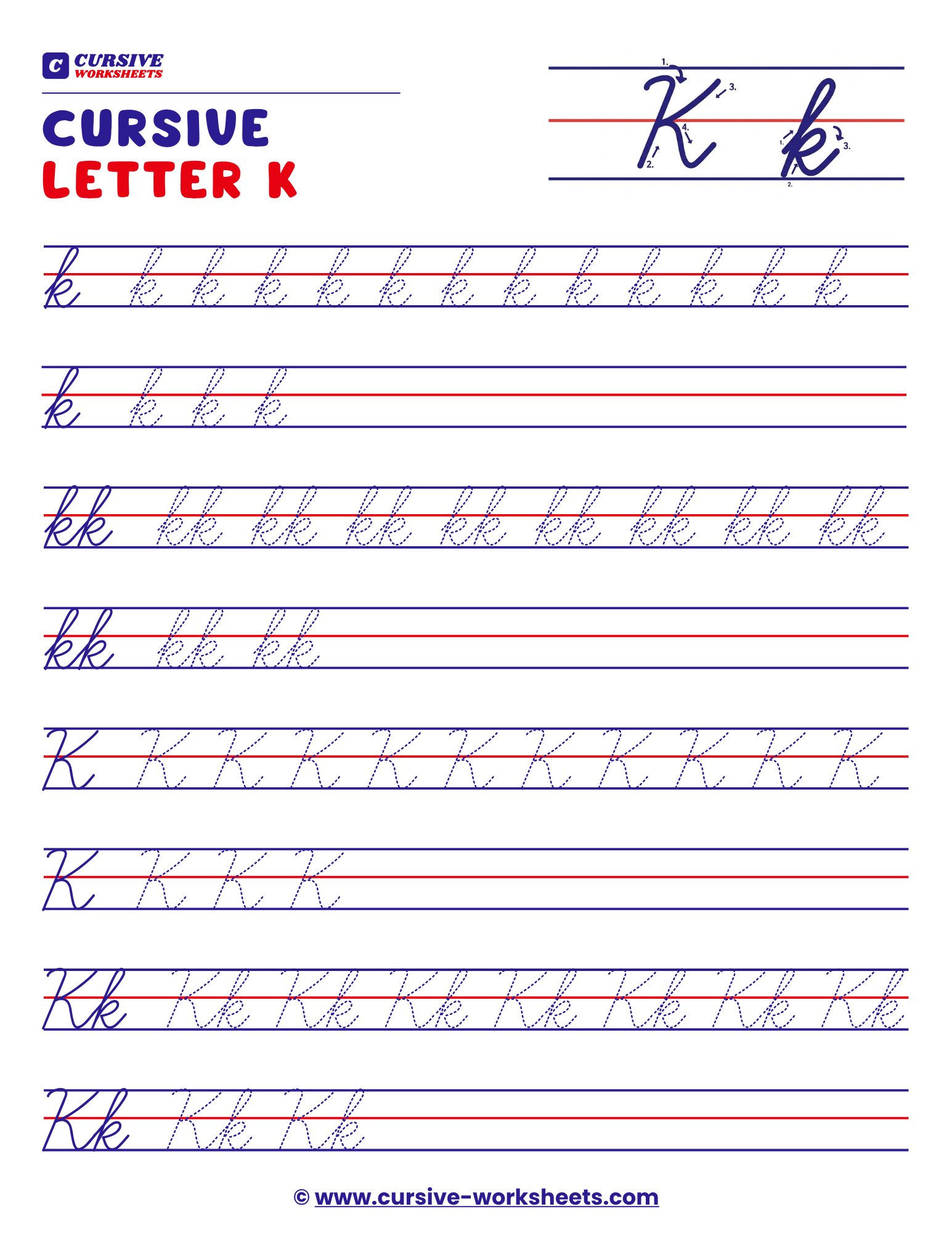
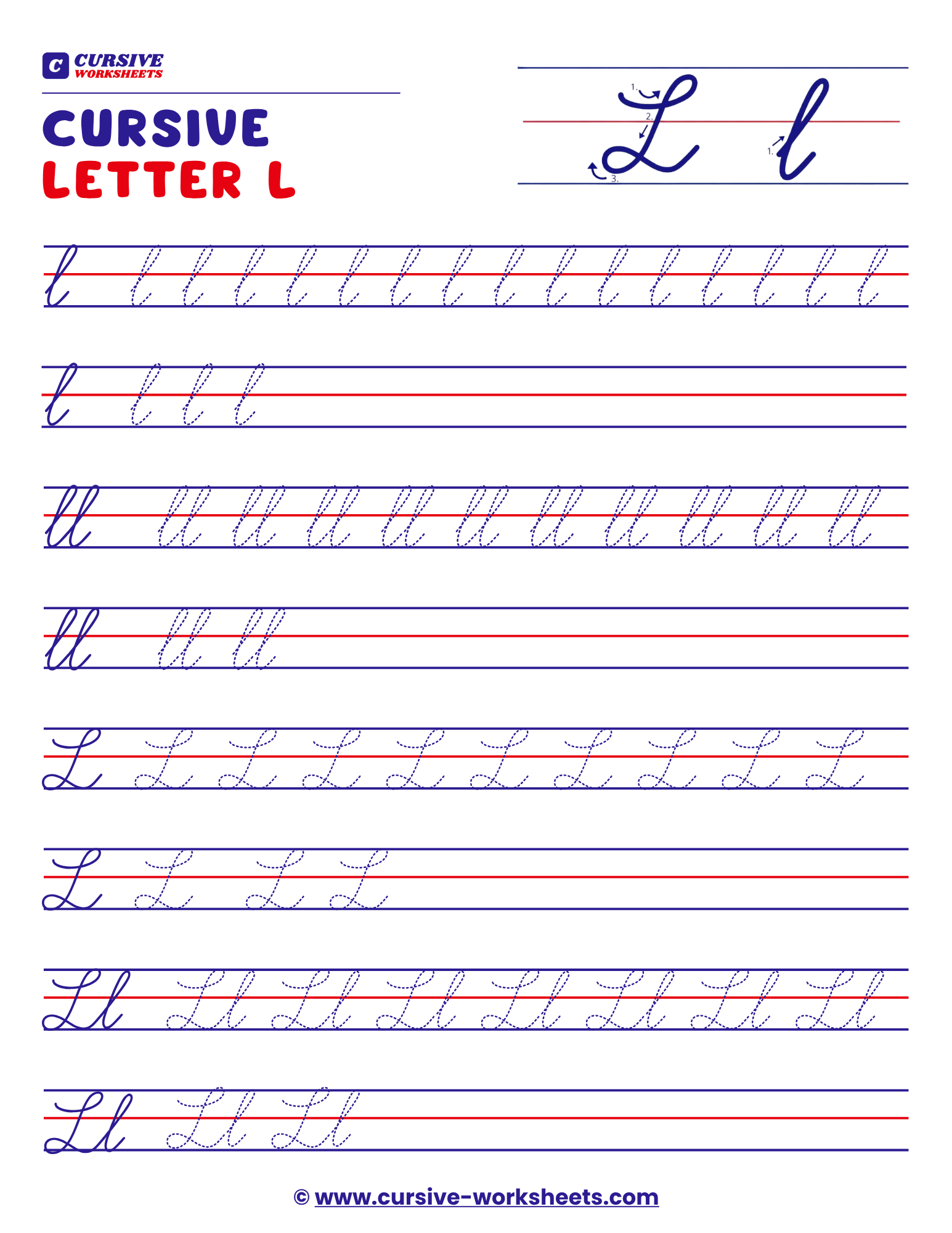
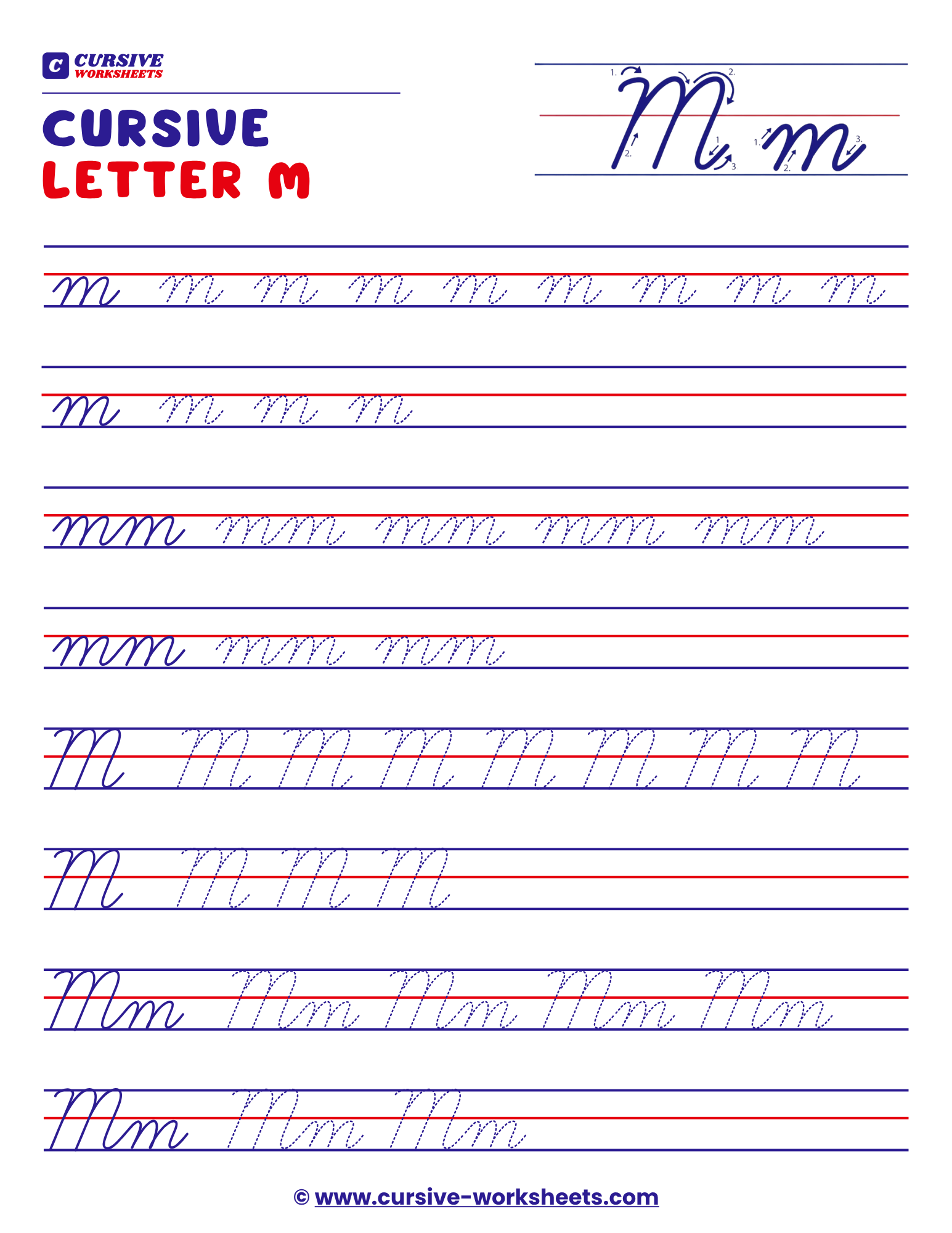
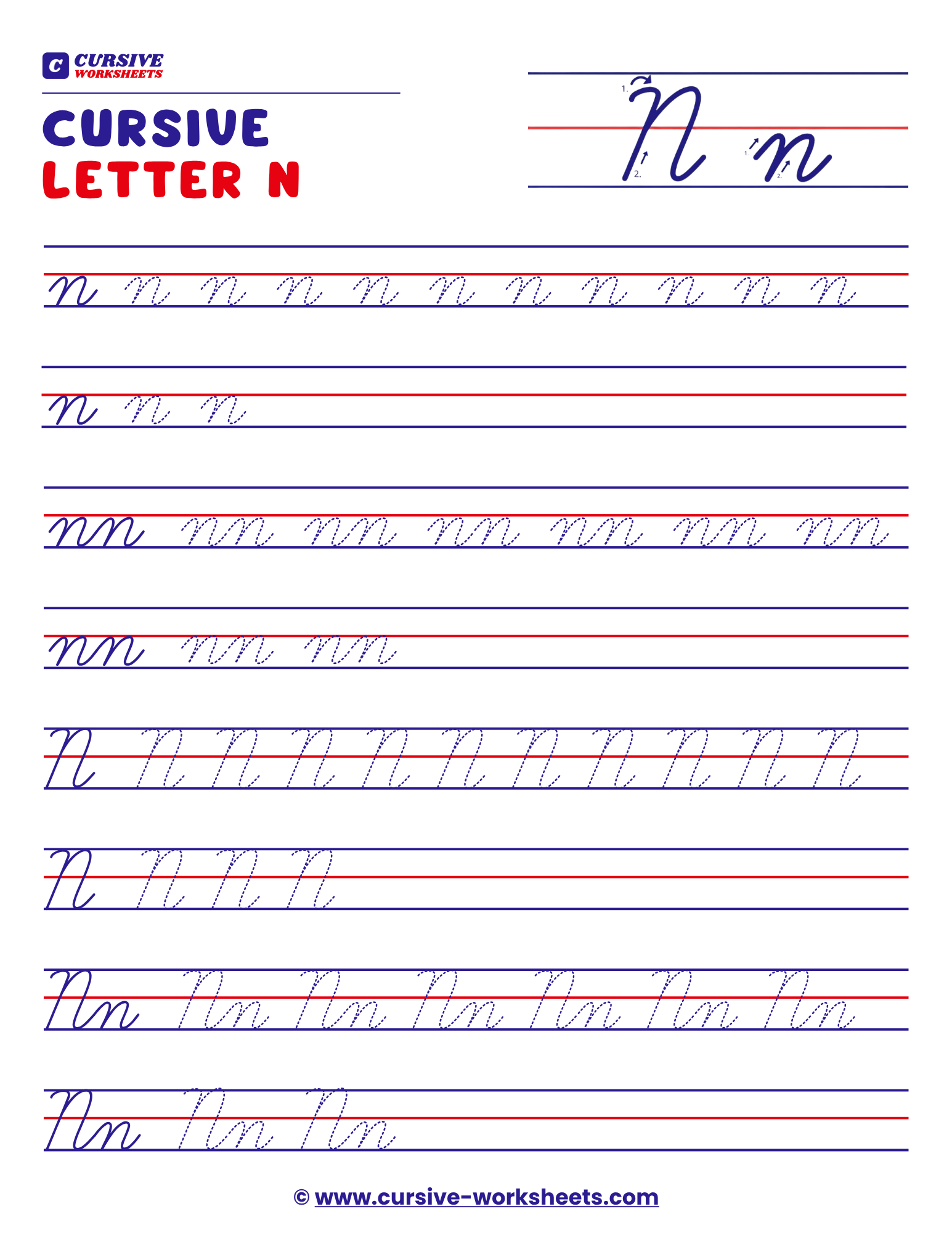
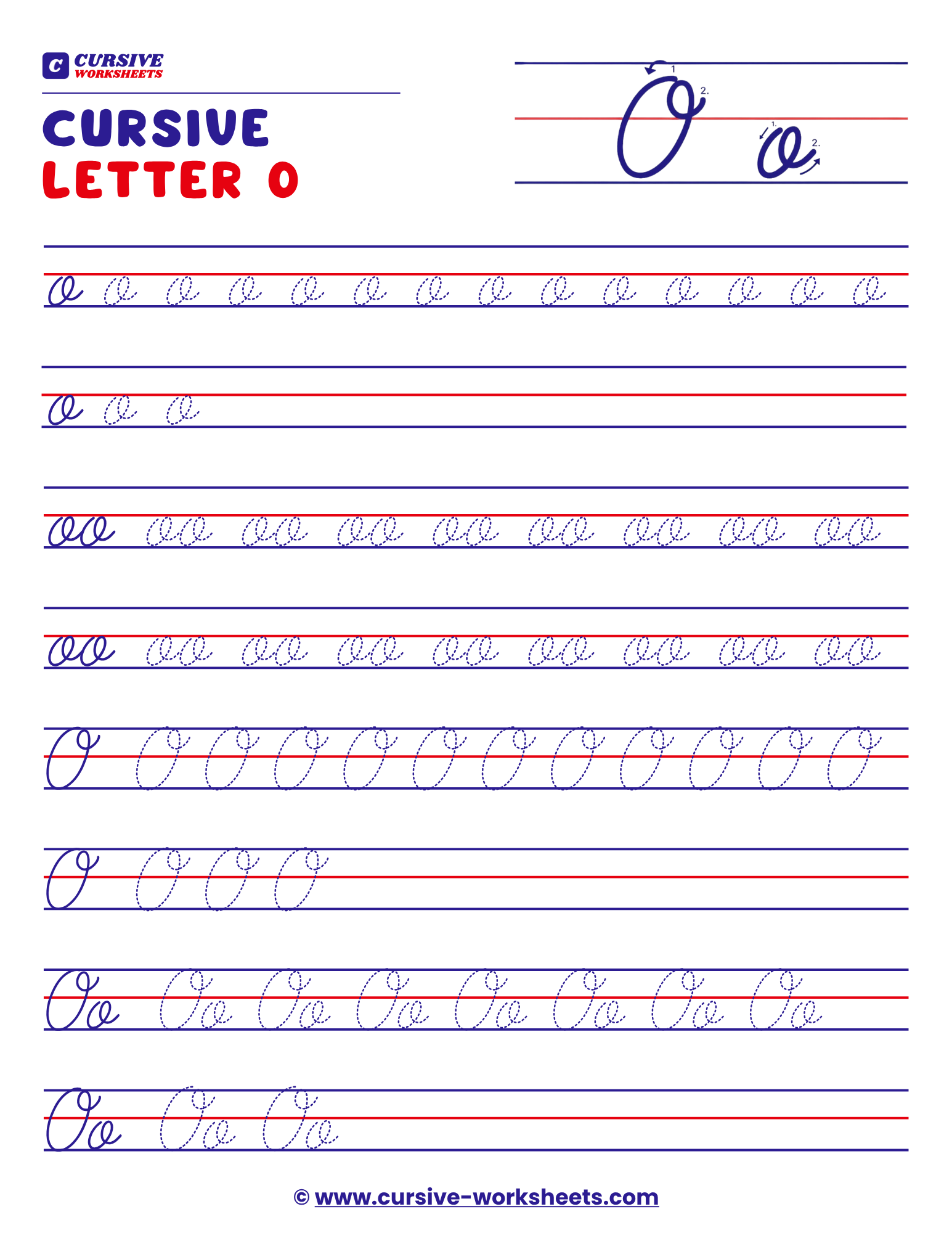
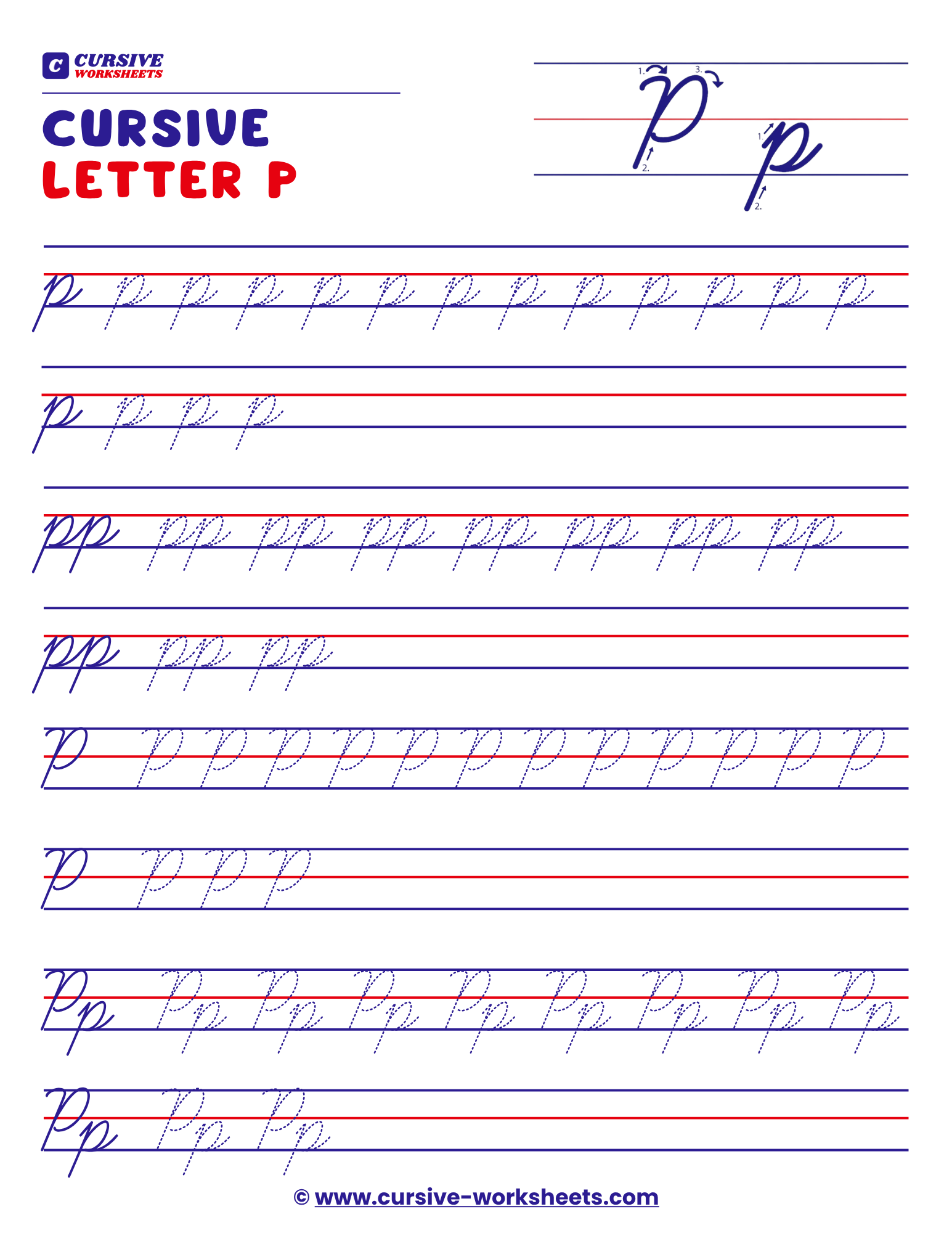
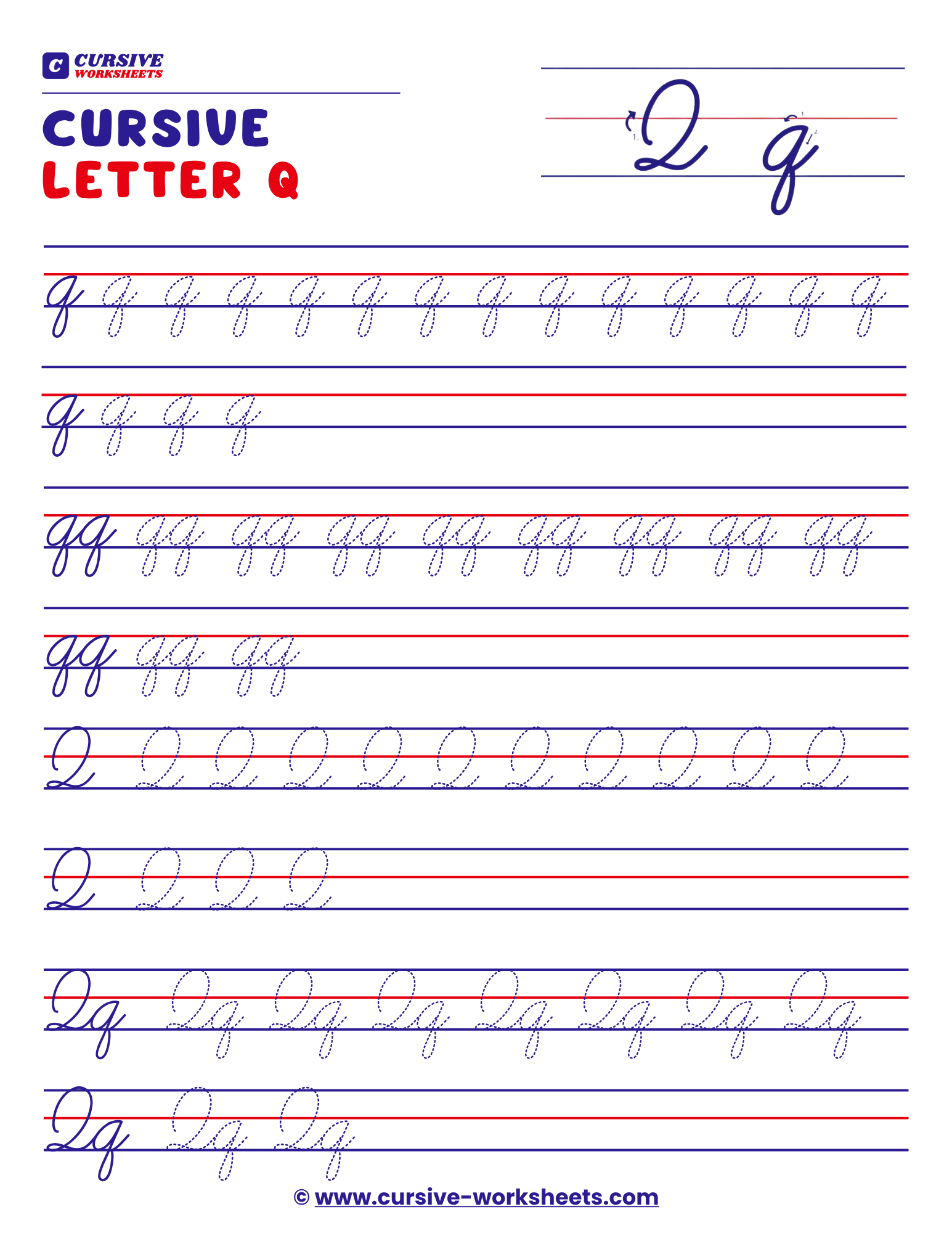
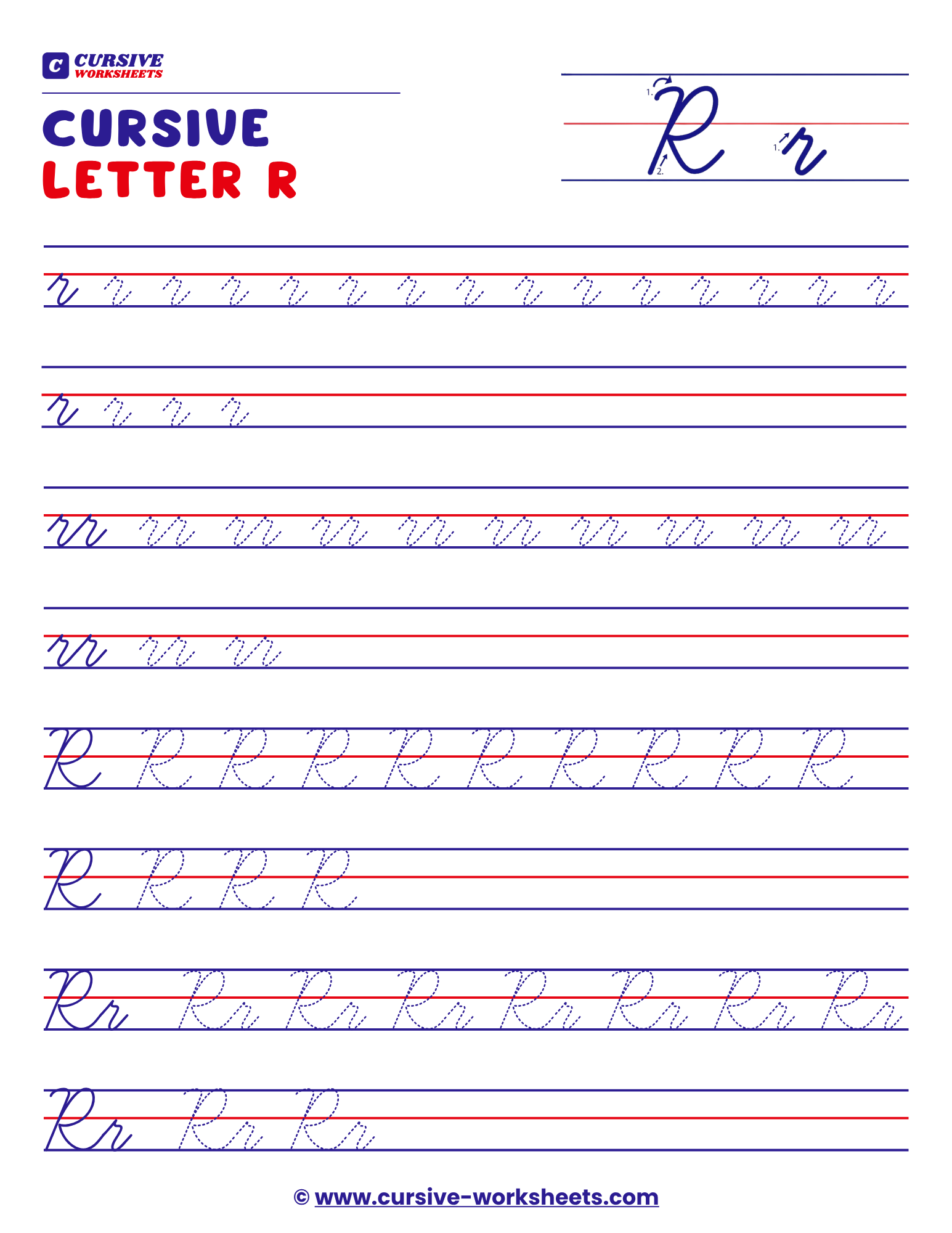
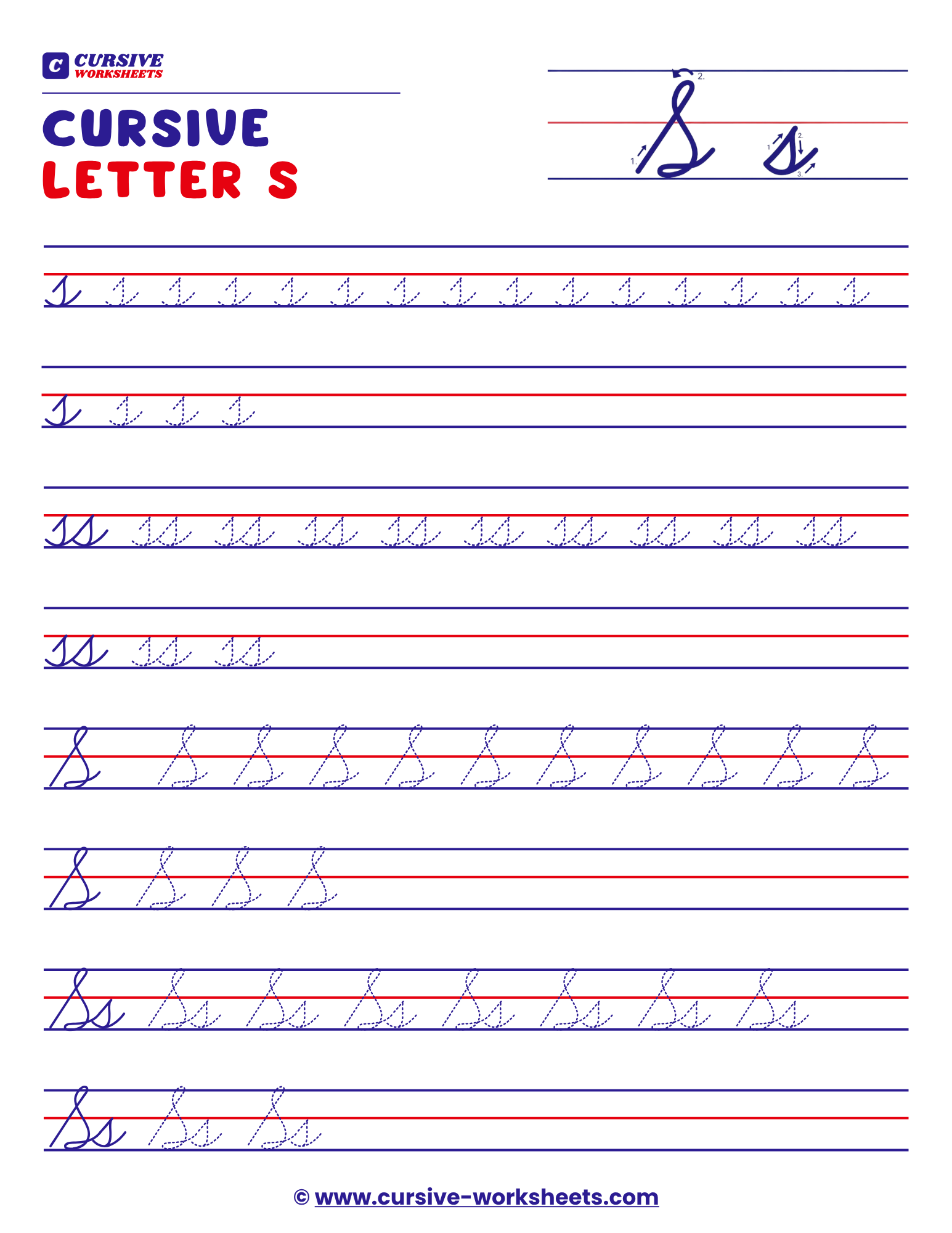
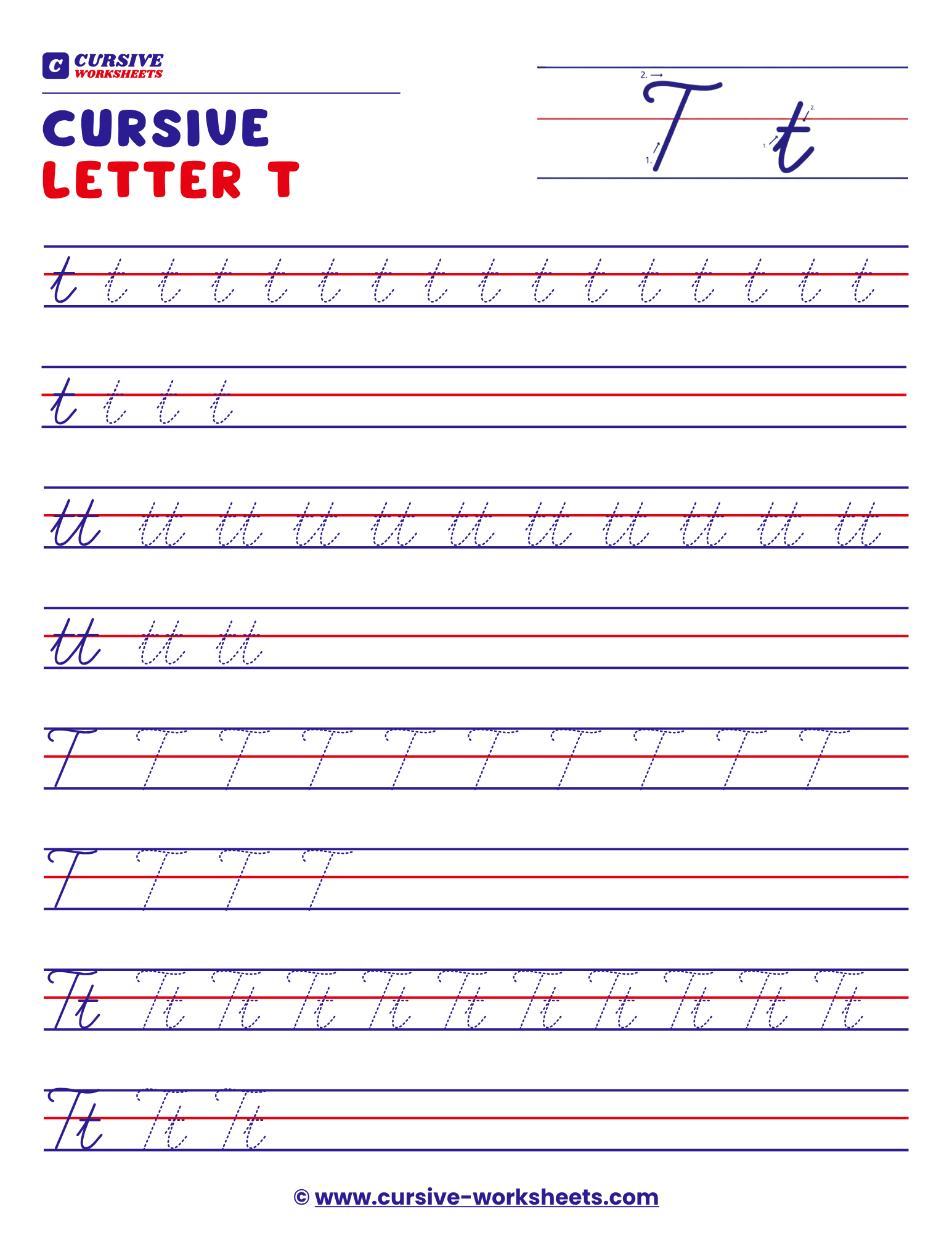
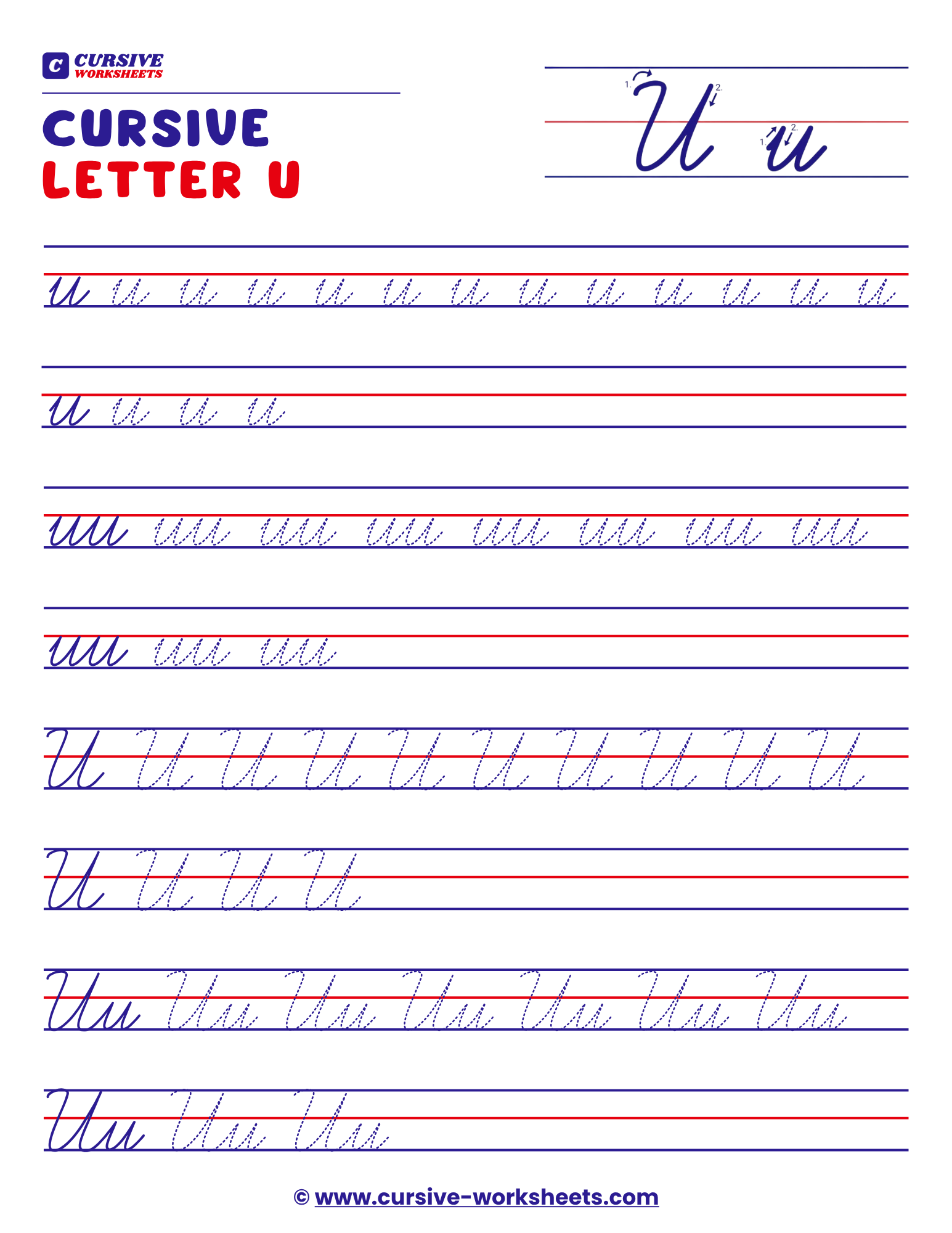
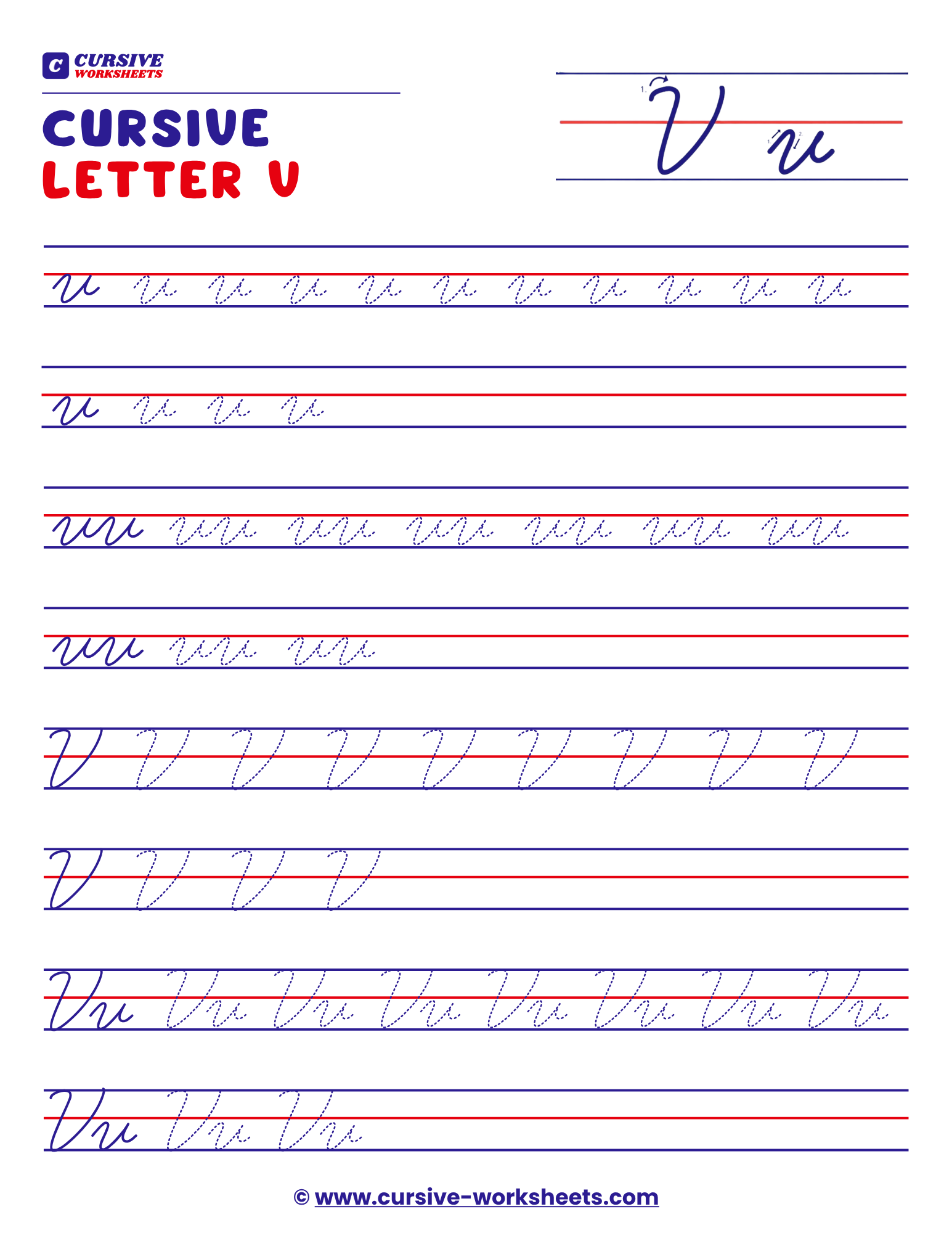
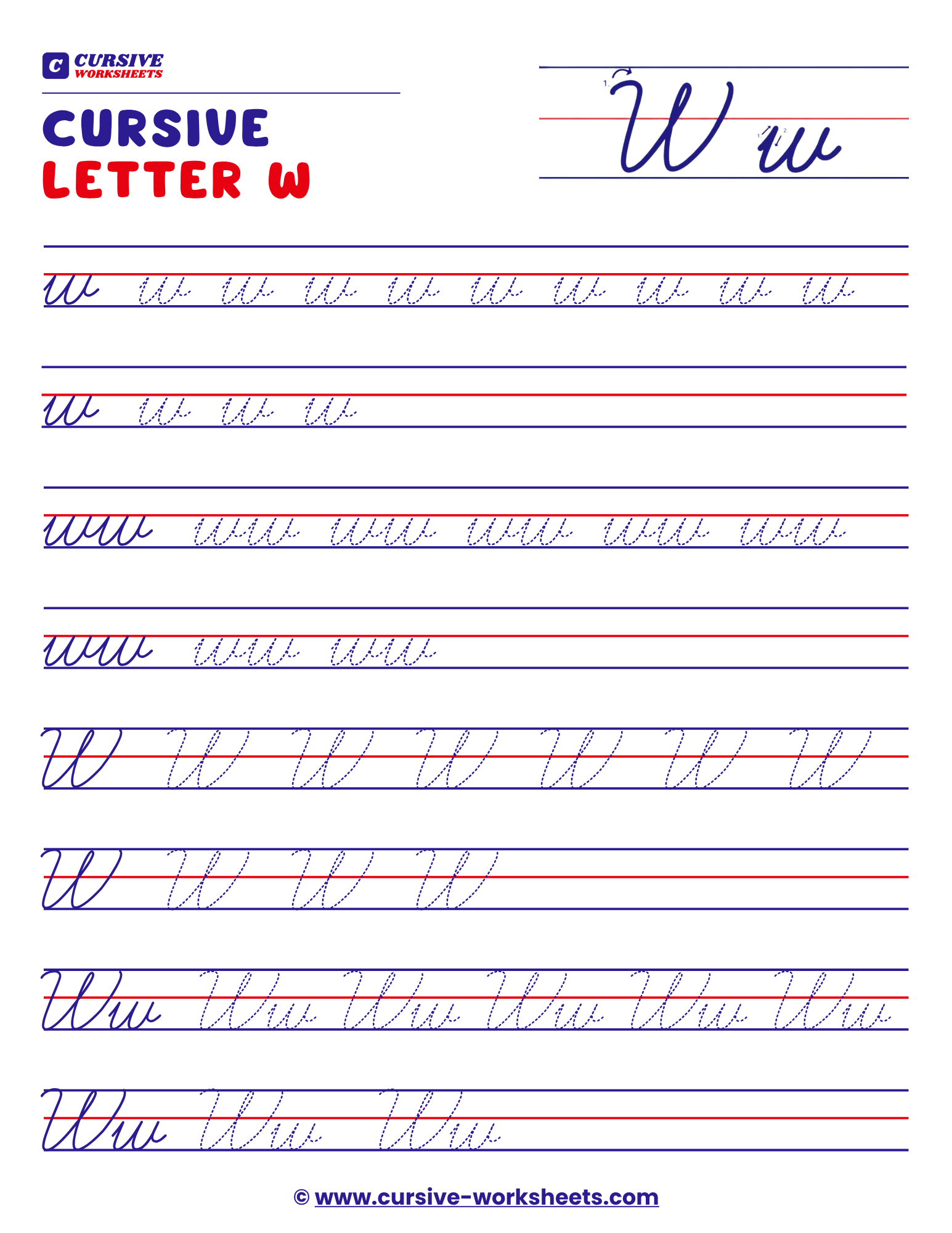
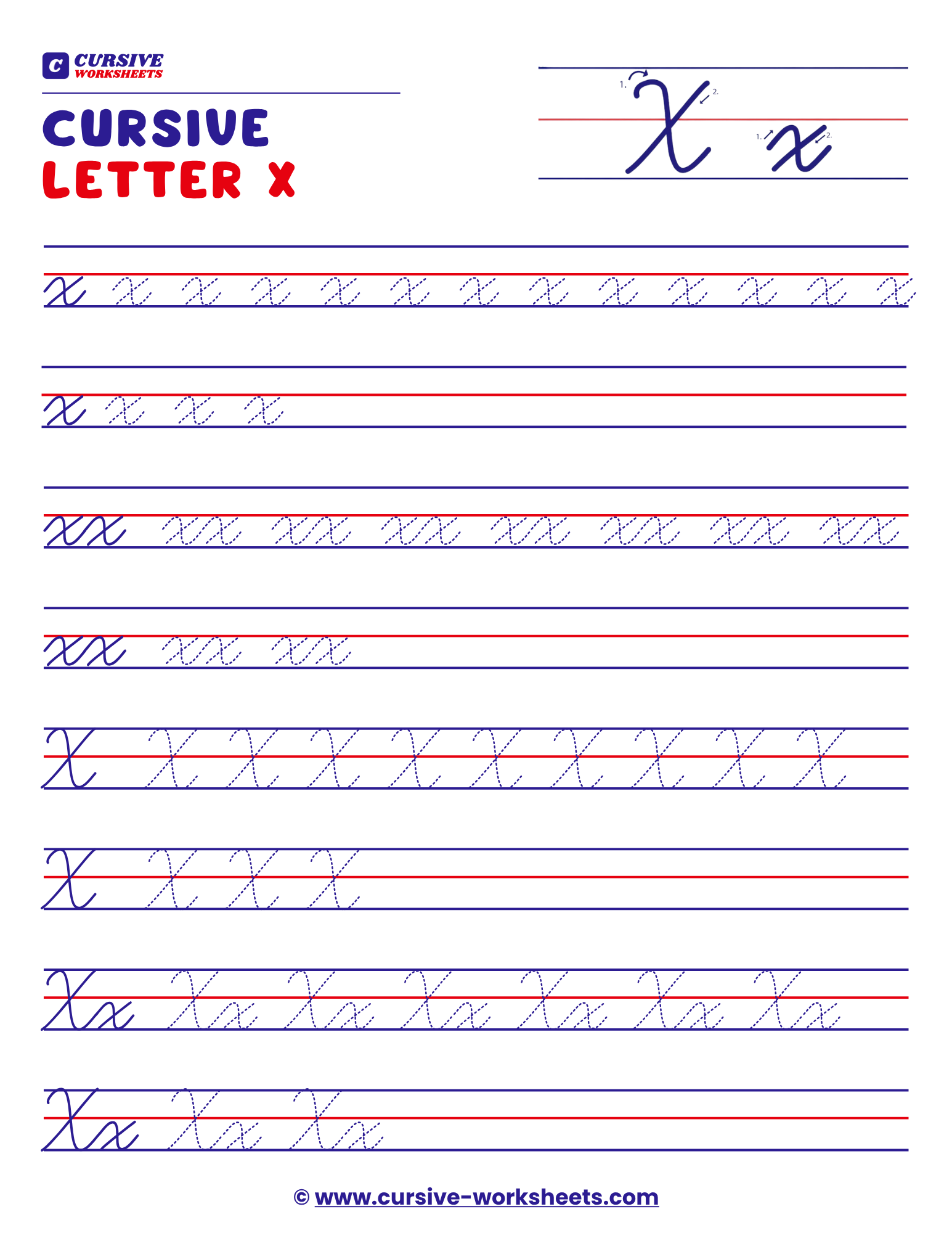
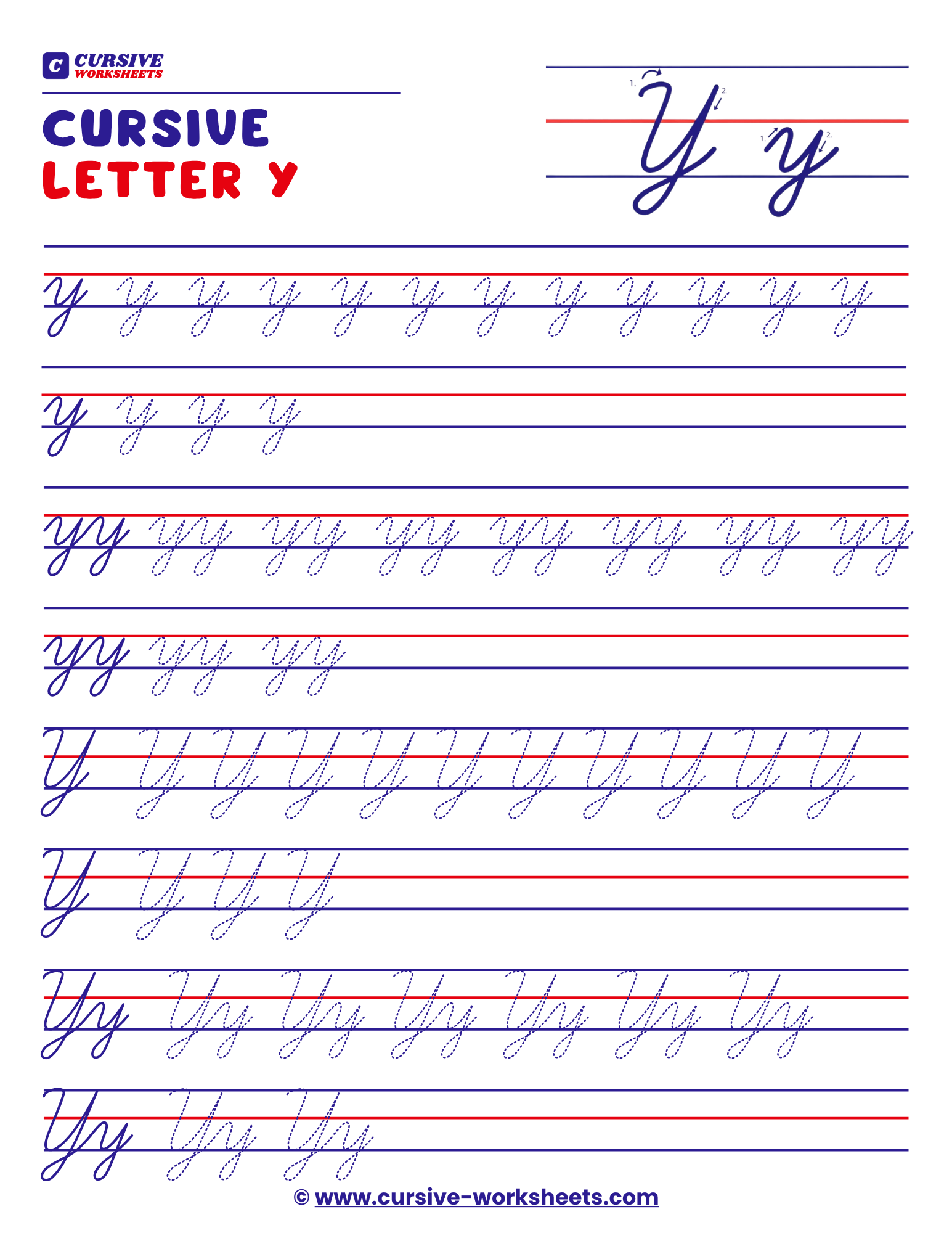
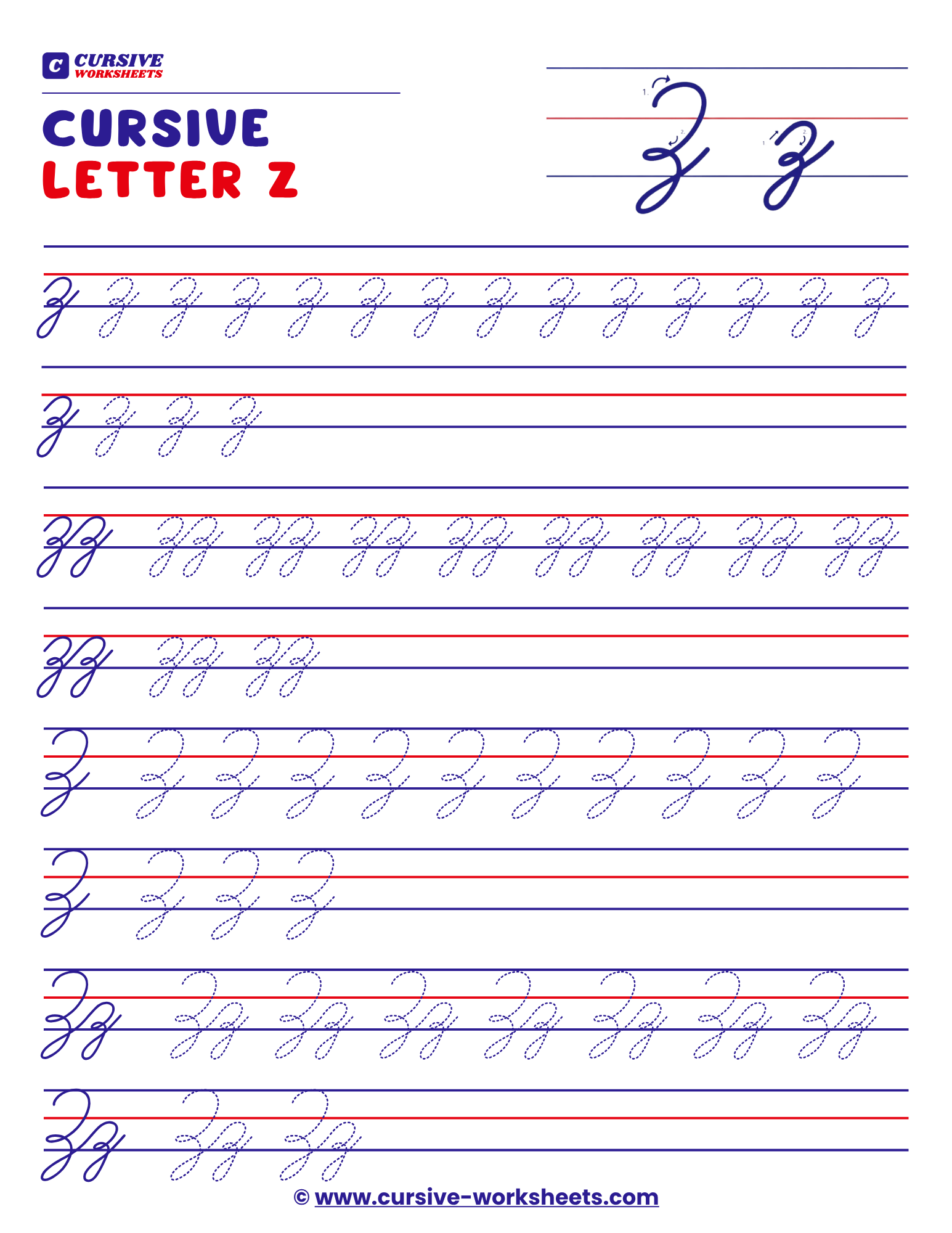
Download free printable cursive alphabet A to Z worksheets in PDF format. Practice uppercase and lowercase cursive letters, improve letter formation, and build smooth, consistent handwriting skills with easy guided writing exercises.
Writing cursive letters requires consistent strokes and smooth connections. Start with lowercase cursive letters, then practice uppercase letters, joining letters, cursive words, sentences, and paragraphs. Focus on proper letter height, slant, spacing, baseline alignment, and stroke direction throughout your cursive writing practice.
Start with Lowercase Cursive Letters
Start with lowercase cursive letters, which form most connected writing. Practice similar stroke patterns in groups, such as i, t, u, w and a, c, o, d. Focus on stroke direction, starting points, height, and finishing strokes. Short letters like a, c, e, i, m, n, o, r, s, u, v, w, x stay within the main writing zone, while tall letters such as b, d, f, h, k, l, t extend upward and descending letters like f, g, j, p, q, y, z extend below the baseline.
Practice Uppercase Cursive Letters
After learning lowercase forms, practice uppercase cursive letters separately. Focus on each capital letter’s unique loops, curves, and starting strokes. Keep uppercase letters larger than lowercase letters while maintaining proper proportions. Practice capitals for sentence beginnings, names, and other proper nouns.
Learn to Join Cursive Letters
Cursive writing connects letters through entry and exit strokes. Practice common joins such as an, ar, ch, er, in, st, th, and wh while keeping spacing and baseline alignment consistent. Practice complete letter pairs to learn different joining movements and avoid unnecessary loops or strokes.
Move from Letters to Cursive Words
Start with short words that use familiar letter combinations, then move to longer words with varied connections. Focus on even spacing, consistent letter height, word shape, and slant. Practicing complete words helps develop smooth, continuous cursive writing.
Practice Writing Cursive Sentences
Use sentences to practice cursive in everyday writing. Start each sentence with an uppercase letter, maintain consistent lowercase letter height and slant, keep clear spaces between words, and preserve smooth letter connections. Include punctuation to practice natural, continuous handwriting.
Write Paragraphs in Cursive
Paragraph practice combines letter formation, connections, spacing, and writing endurance. Start writing short passages while maintaining a consistent baseline, slant, letter size, and word spacing. As your accuracy improves, write original paragraphs to build fluent, readable cursive handwriting.
Cursive Alphabet Practice Tips
Practice the cursive alphabet regularly to improve letter formation, connections, spacing, and writing control. Start slowly and focus on forming each letter correctly before trying to write faster. Short, consistent practice sessions are often easier to manage than occasional long sessions.
Use cursive worksheets to keep letters aligned and maintain consistent height, slant, and spacing. Practice difficult letters and common letter connections separately before using them in complete words and sentences.
Keep your pen or pencil grip relaxed and your hand in a comfortable position while writing. Review your handwriting after practice and look for uneven letters, spacing, slant, or connections. Correcting these issues through repeated practice helps build more consistent and readable cursive handwriting.
Common Cursive Writing Mistakes
Learning cursive takes practice, and common mistakes can affect handwriting clarity. Focus on consistent letter size, slant, formation, connections, spacing, and baseline alignment. Identifying these problems early helps improve cursive handwriting more effectively.
Inconsistent Letter Size
Letters that vary too much in height can make words difficult to read. Keep lowercase letters at a consistent height and make ascenders and descenders extend to the appropriate height. Uppercase letters should be larger while remaining proportional to the rest of the writing.
Uneven Letter Slant
Cursive letters usually follow a similar slant within a word or line. When some letters lean sharply while others remain upright, the writing can look uneven. Practice maintaining a consistent angle throughout your cursive handwriting.
Incorrect Letter Formation
Incorrect starting points, stroke directions, curves, or loops can change the appearance of a cursive letter. Practice each letter slowly and compare its formation with the correct model before increasing writing speed.
Broken or Incorrect Letter Connections
Unnecessary pen lifts and incorrect joining strokes can interrupt the natural flow of cursive writing. Practice common letter pairs and connections to learn where one letter should lead into the next without adding extra loops or strokes.
Uneven Spacing Between Letters and Words
Crowded letters can become difficult to distinguish, while excessive gaps can make words appear disconnected. Keep letter spacing consistent within words and leave a clear, slightly larger space between separate words.
Poor Baseline Alignment
Letters should sit consistently on the writing line. Short lowercase letters remain near the baseline, while ascenders extend upward and descenders extend below it. Inconsistent baseline placement can make an otherwise well-formed word look uneven.
Writing Too Quickly
Writing too fast can lead to incomplete strokes, incorrect connections, and inconsistent letter shapes. Build accuracy and control first, then gradually increase your writing speed as the letter forms become familiar.
Why Learn the Cursive Alphabet?
The cursive alphabet is the foundation for learning cursive handwriting. Practicing uppercase and lowercase cursive letters helps learners understand letter formation, stroke direction, size, slant, spacing, and how letters connect within words.
Regular cursive writing practice can develop fine motor control and handwriting fluency by requiring coordinated, continuous hand movements. It also helps learners recognize cursive letterforms, which can be useful when reading handwritten notes, historical documents, personal letters, and other connected handwriting.
Learning the cursive alphabet also gives students a practical handwriting skill for schoolwork, signatures, note-taking, journaling, and personal writing. Starting with individual cursive letters and gradually practicing connections, words, and sentences allows learners to build accuracy and consistency before focusing on writing speed.
Start by learning lowercase cursive letters and their basic strokes, then practice uppercase letters. Next, learn how letters connect and use those connections to write cursive words, sentences, and paragraphs.
Lowercase cursive letters are generally a useful starting point because they appear more frequently in connected writing. After becoming familiar with lowercase letter formation, practice uppercase cursive letters and their larger, more distinctive shapes.
Use cursive alphabet worksheets or lined paper to practice letter formation, size, slant, spacing, and baseline alignment. Start slowly, repeat difficult letters and connections, and gradually move from individual letters to words and sentences.
Cursive letters are connected through entry and exit strokes. Practice common letter pairs and joins while keeping the letters aligned and evenly spaced. Different letters may require different joining movements, so practicing complete pairs is useful.
The time required varies by learner and depends on previous handwriting experience and practice frequency. Regular, focused practice can help build familiarity with letter formation and connections, while developing fluent handwriting generally requires continued practice.
Yes. Cursive worksheets provide structured practice for letter formation, connections, spacing, slant, and baseline alignment. Repeated practice with guided letterforms can help learners develop more consistent and readable cursive handwriting.