
Cursive D
Practice uppercase cursive D and lowercase cursive d with free printable cursive D worksheets. Learn the basic strokes for each form, practice the tall lowercase d, and build smoother connections for writing D in words and sentences.
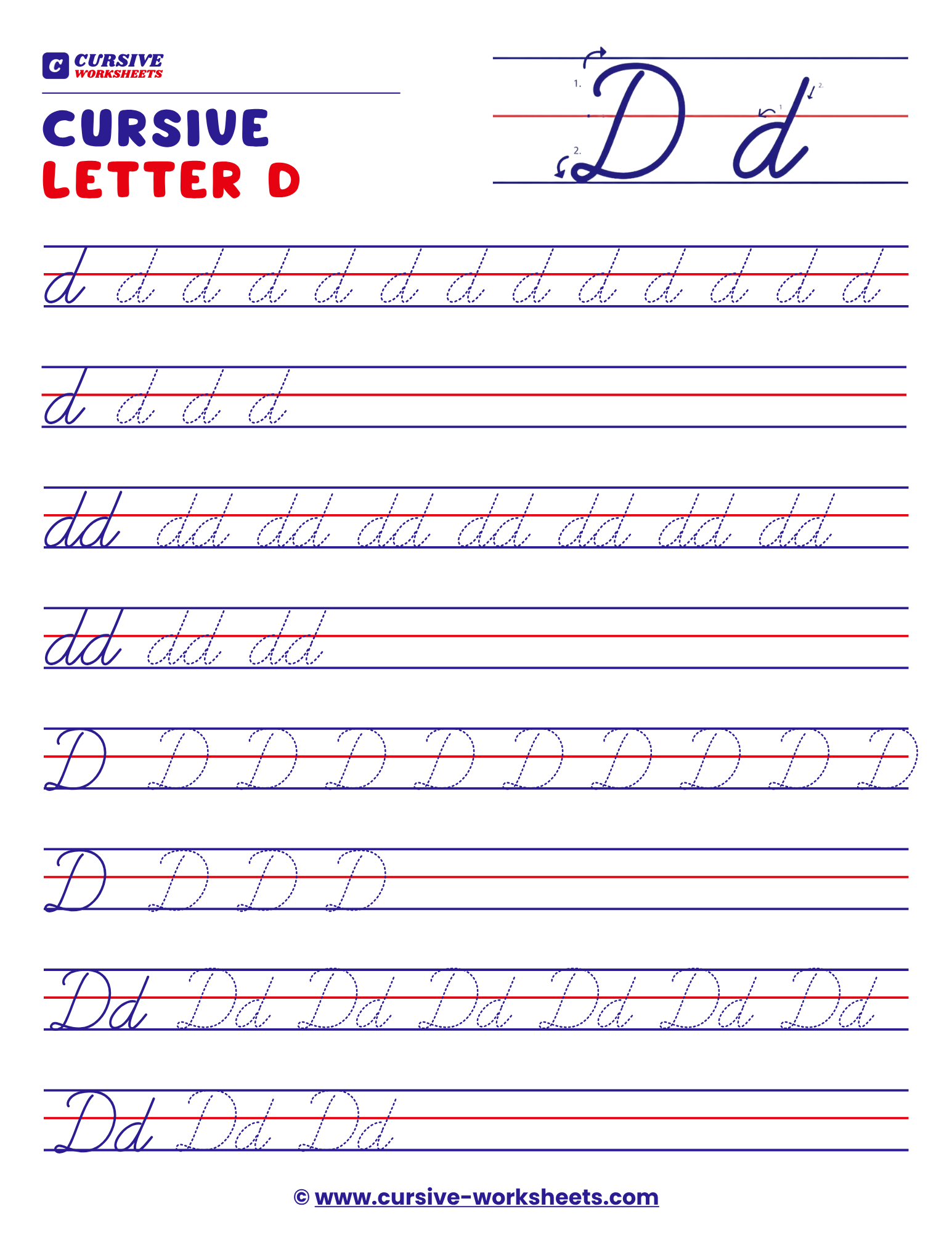
Download Cursive D Worksheet
Download a free printable cursive D worksheet in PDF format to practice uppercase and lowercase D. Trace the letter models first, then write each form independently on the practice lines. Repeated practice helps you work on the height, oval shape, spacing, and connecting strokes of cursive D.
How to Write D in Cursive
Cursive D has two noticeably different forms. Lowercase d combines a rounded oval with a tall ascending stroke, while uppercase D uses a larger, flowing shape. The lowercase form is especially useful for practicing how a tall letter returns smoothly to the writing line.
How to Write a Capital D in Cursive
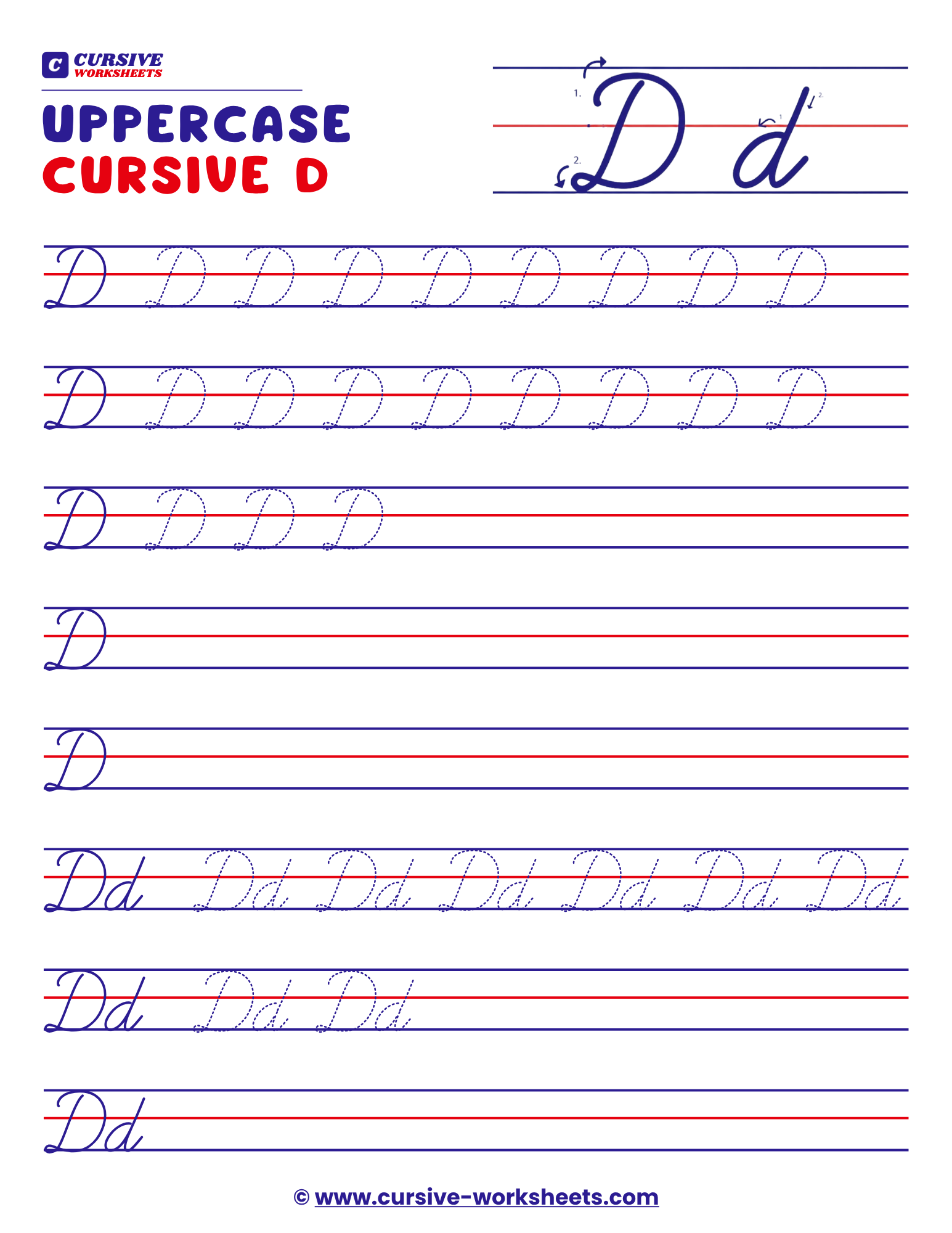
To write a capital D in cursive, begin with the entry stroke used by your chosen cursive style and move into the tall main portion of the letter. Continue through the curved stroke that forms the rounded right side, then finish with the stroke shown in the worksheet model.
Keep the capital D tall enough to stand clearly above the lowercase letters that follow it. The curved side should have a controlled shape rather than becoming excessively wide. Practice several capital Ds on the same line and compare their height, width, and slant. Because the capital D varies noticeably among cursive handwriting systems, follow the specific model provided on your worksheet rather than combining features from different cursive styles.
How to Write a Lowercase d in Cursive
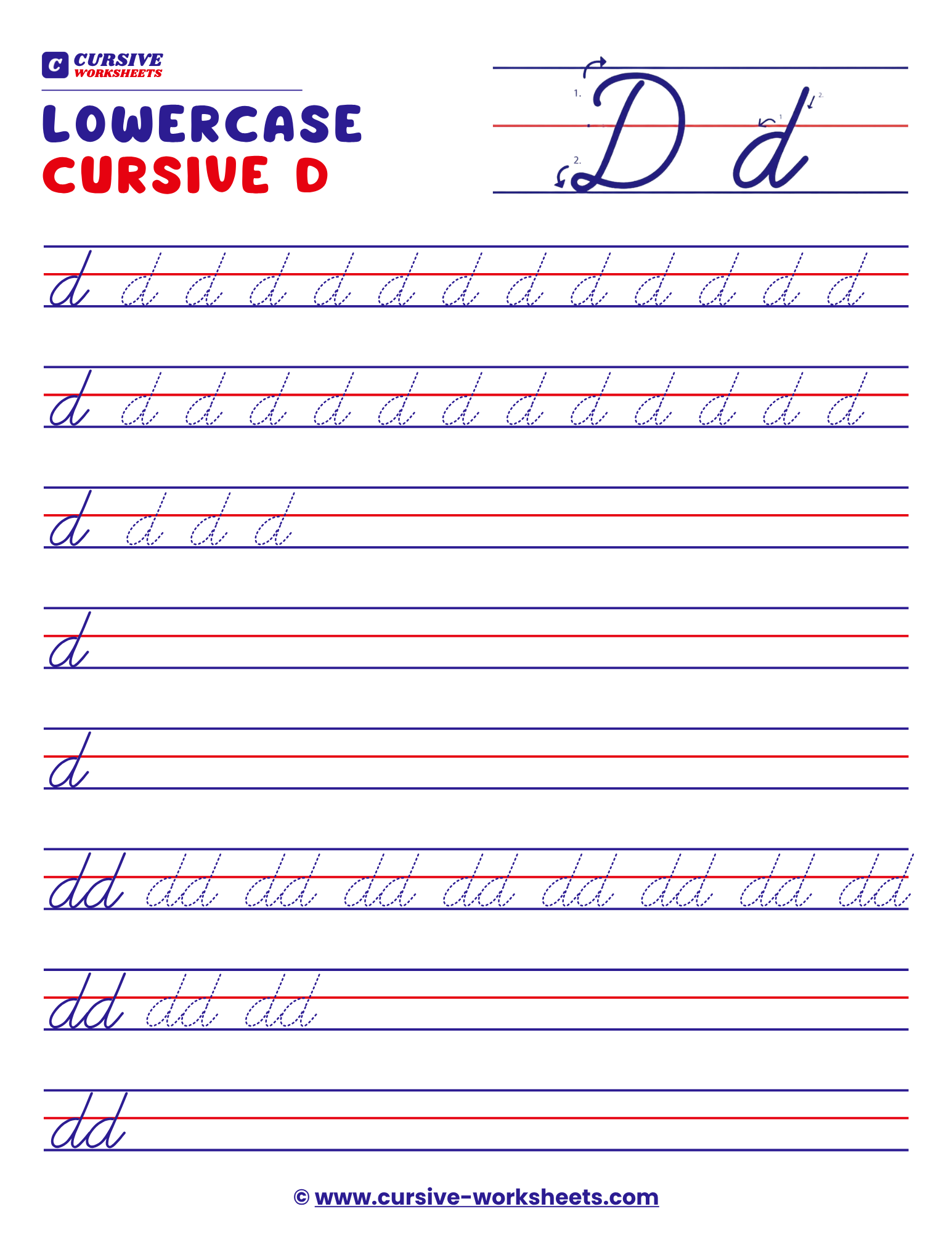
To write a lowercase cursive d, begin by forming the rounded body of the letter. Continue the stroke upward into the tall ascender, then bring it back down toward the writing line and finish with the exit stroke used by your cursive style.
The tall part of d should rise above the height of short lowercase letters such as a, c, and e. Keep the oval clearly defined so the letter does not become confused with other rounded letters. Practice the oval and tall stroke as one smooth movement. Once you can form the letter consistently, repeat it across a line without tracing.
How to Connect Cursive D to Other Letters
Lowercase d appears in many common words, making its exit stroke useful to practice with both vowels and consonants. Begin with two-letter combinations and gradually move into longer words.
Connecting Lowercase Cursive D
After completing lowercase d, continue from its exit stroke into the next letter. The connection should remain smooth without changing the size or slant of the following letter.
Practice combinations such as da, de, di, do, du, dr, and dw. Then use words such as day, desk, dish, dog, drum, and draw to practice d in complete words. The tall ascender should remain consistent even when d is written quickly. Avoid allowing the tall stroke to become shorter in the middle of a word.
Connecting Uppercase Cursive D
A capital D can be followed by a lowercase letter when writing names and other words that begin with D. Whether the capital D is joined directly to the next letter depends on the cursive system being taught.
Try combinations such as Da, De, Di, Do, and Dr if your chosen handwriting model uses connected capitals. If the model teaches a separate capital D, practice the capital independently and begin the lowercase letter after it without forcing a connection. For both approaches, focus on keeping the capital D proportional to the letters that follow it.
Common Mistakes to Avoid When Writing Cursive D
Cursive D can be challenging because lowercase d combines a rounded body with a tall ascender. Watch for these letter-specific problems during practice.
- Making the lowercase d look like a cursive a: The rounded body of d can resemble a, but d needs a distinct tall ascender. Make sure the upper stroke rises clearly above the midline.
- Making the ascender too short: If the tall stroke does not reach the expected height, lowercase d can lose its characteristic appearance. Compare its height with other tall letters in your worksheet.
- Making the oval too large: The body of lowercase d should remain proportionate to the writing space. An oversized oval can make the letter look loose and disrupt word spacing.
- Creating an uneven oval: A lopsided or sharply pointed oval can make d harder to recognize. Practice a smooth, controlled rounded body before adding speed.
- Using the wrong starting direction: Different cursive systems use different entry strokes. Follow the stroke order of the model you are learning instead of combining instructions from another handwriting style.
- Letting the tall stroke lean differently: The ascender should follow the general slant of your handwriting. A sudden change in direction can make the d look disconnected from the other letters.
- Forgetting the exit stroke: A lowercase d needs a natural ending movement when it appears in connected handwriting. Stopping abruptly can make the transition to the next letter awkward.
- Making capital D too wide: The rounded portion of a capital D should remain controlled. Excessive width can make the letter take up more space than the other capital letters in a word.
Practicing with the Printable Cursive D Worksheet
Start with individual uppercase D and lowercase d exercises. Trace each form several times while paying attention to the tall ascender in lowercase d and the overall proportions of capital D.
After tracing, write lowercase d without the guide. Practice the combinations da, de, di, do, du, dr, and dw, then move into words such as day, desk, dish, dog, drum, and draw. These exercises help you practice the transition from the tall d into different following letters.
For capital D, practice the letter on its own before adding a lowercase letter. If your handwriting style uses joined capitals, work on combinations such as Da, De, Do, and Dr. If it uses an unjoined capital D, focus instead on keeping the capital well placed at the beginning of the word.
Finish by writing short words or sentences without tracing. Try to maintain the same ascender height, oval shape, slant, and spacing as you increase your writing speed.
Frequently Asked Questions
To write C in cursive, use a smooth curved movement rather than forming the letter with straight lines. Capital C is larger and more prominent, while lowercase c is a smaller open curve. Follow your worksheet model and practice each form repeatedly.
Begin with the rounded body of a lowercase d, then form its tall ascender and bring the stroke back toward the writing line. Finish with the exit stroke used in your handwriting style. The ascender should be noticeably taller than short lowercase letters.
Both letters can have a rounded body, but lowercase d has a tall ascender that rises above the midline. Cursive a remains within the lowercase writing area, while d extends upward before returning to the baseline.
The tall ascender helps distinguish d from other rounded lowercase letters. If it is too short or missing, the letter can become difficult to recognize, especially when written quickly inside a word.
Use the ending stroke of the lowercase d to move naturally into the following letter. Practice combinations such as da, de, di, do, du, dr, and dw before using longer words.
Useful practice words include day, desk, dish, dog, door, drum, draw, and dream. These words provide different letter combinations after d and help you practice the letter in natural handwriting.
There is no single rule for every cursive handwriting style. Some systems teach joined capital D forms, while others use an unjoined capital D. Follow the model used by your worksheet or handwriting curriculum rather than forcing a connection.
The rounded body of d can look similar to a when its ascender is too short or poorly formed. Make the tall stroke clearly rise above the midline while keeping the oval body smaller and controlled.
Begin with the rounded body and tall stroke separately if the complete letter feels difficult. Then combine them, trace several examples, and move to independent writing. Short practice sessions with familiar D words can make the exercise easier to manage.
Uppercase D is a larger capital form used at the beginning of names, sentences, and other proper uses of D. Lowercase d is smaller and includes a distinctive tall ascender above its rounded body.
Practice keeping three features consistent: the size of the oval, the height of the ascender, and the letter’s slant. Write several lowercase d letters on the same ruled line and compare them before moving on to connected words.